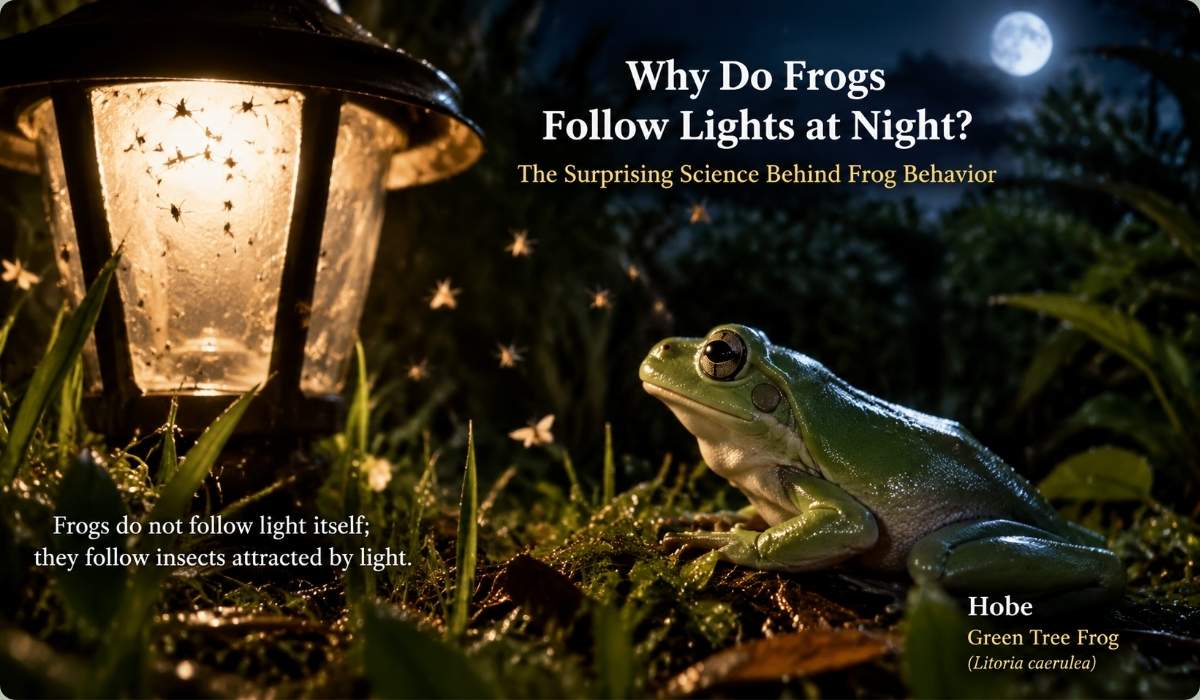
Rain can dramatically change frog behavior, often turning a quiet garden, forest, or wetland into a lively habitat filled with movement and calls. Frogs have thin, highly permeable skin that must remain moist for normal breathing and hydration. During dry weather, many frogs hide under leaves, rocks, logs, or soil to reduce water loss. When rain arrives, the cooler temperature and increased humidity create safer conditions for them to leave their shelters. This is why people often notice more frogs during or immediately after rainfall. Wet ground allows frogs to travel without becoming dehydrated, while rain also increases the availability of insects, worms, slugs, and other prey. For many species, rainy weather signals the beginning of breeding activity. Male frogs gather near ponds and temporary pools, calling loudly to attract females, while the newly formed water bodies provide suitable places for laying eggs.
Do Frogs Like Rain? Understanding Frog Behavior During Wet Weather
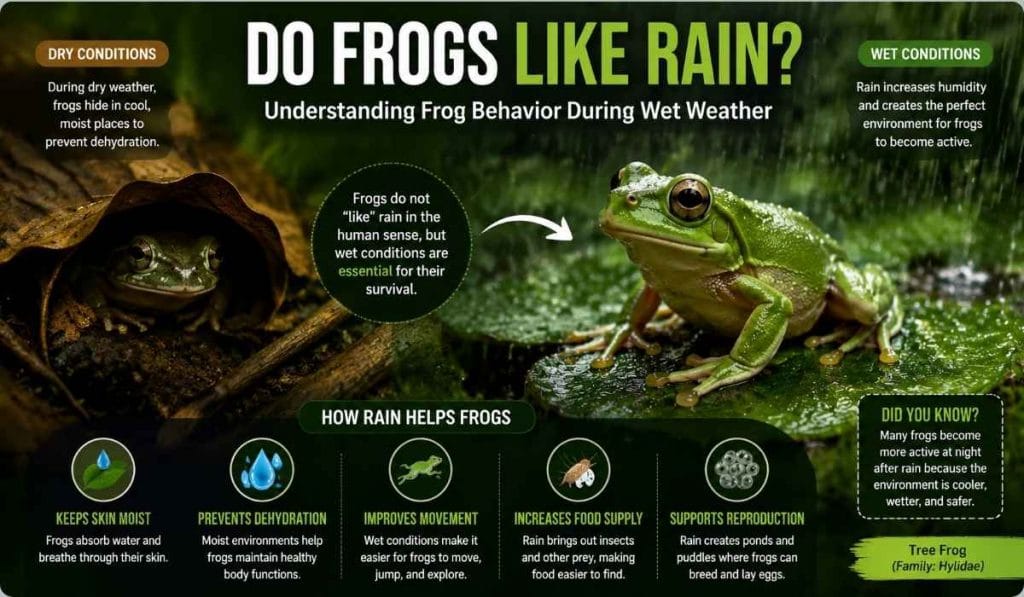
Rain plays a major role in frog behavior, survival, and reproduction. Although frogs do not “enjoy” rain in the same way humans might enjoy pleasant weather, they strongly depend on wet conditions because their bodies are adapted to moisture-rich environments. Rain creates the perfect combination of humidity, cooler temperatures, increased food sources, and breeding opportunities, causing many frogs to become much more active.
Why Frogs Become More Active After Rain
Rain provides several important benefits that encourage frogs to leave their hiding places and move around more frequently. One of the biggest reasons frogs become active after rain is that it increases skin moisture. Frogs have thin, permeable skin that allows them to absorb water and exchange gases. Unlike mammals, frogs do not drink water in the usual way; instead, they absorb much of their required moisture through specialized areas of their skin. Rain keeps their skin hydrated, allowing their bodies to function efficiently. Wet conditions also reduce the risk of dehydration. During dry weather, frogs lose water quickly through their skin and must hide in moist shelters to survive. Rainy environments allow them to stay active for longer periods without losing excessive body moisture. Rain also makes movement easier. A wet surface allows frogs to crawl, hop, and search for food without the danger of their skin drying out. Soft, damp soil is especially beneficial for frogs that burrow or travel between habitats. Another major factor is increased food availability. Rain brings out insects, worms, snails, and other small animals that frogs eat. As prey becomes more abundant and easier to find, frogs spend more time hunting. This is why gardens, forests, and wetlands often appear full of frogs after rainfall.
How Rain Changes Frog Activity Patterns
Rain can completely change when and how frogs are active. Many frog species that remain hidden during dry periods become visible during or after rainfall because the environment becomes safer and more suitable for movement. Most frogs are naturally more active during the nighttime, especially after rain. Cooler temperatures and higher humidity reduce water loss, making nighttime conditions ideal for feeding and calling. However, some species may also appear during the daytime immediately after heavy rainfall when moisture levels are high. During the rainy season, frogs often increase their activity because it is the best time for reproduction. Temporary pools, ponds, and flooded areas provide safe locations for laying eggs and raising tadpoles. Male frogs frequently gather near water sources and produce loud calls to attract females. Many frogs that appear to “come out of nowhere” after rain were actually hiding underground, beneath leaves, inside tree holes, or under rocks. They remain inactive during dry conditions to conserve energy and moisture. Rain acts as a signal that conditions have improved, encouraging them to return to the surface.
Do All Frog Species Come Out During Rain?
Not all frogs respond to rain in the same way. Their behavior depends on their habitat, climate, and adaptations.
| Frog Type | Rain Response | Behavior During Wet Weather |
| Tree Frogs | Highly active after rain | Climb vegetation, hunt insects, and call near water sources |
| Bullfrogs | Increased activity | Move around ponds and wetlands to feed and breed |
| Wood Frogs | Seasonal rain and moisture dependent | Become active during spring rains and breeding periods |
| Desert Frogs | Specialized response | Emerge after rare rainfall events to feed and reproduce |
Tree frogs are strongly associated with humid conditions. After rain, they often become more visible because moisture helps them climb plants and search for insects.
Bullfrogs usually remain close to permanent water sources such as ponds and lakes. Rain may increase their movement, but they do not always need rainfall to become active because their habitat already provides moisture.
Wood frogs depend heavily on seasonal weather changes. In colder regions, spring rain and melting snow trigger breeding migrations when large numbers of frogs travel to temporary pools.
Desert frogs show one of the most dramatic responses to rain. Many desert species remain hidden underground for months and emerge only after rainfall creates temporary water sources. They quickly feed, mate, and lay eggs before the water disappears. Therefore, while rain attracts many frogs, the response varies greatly between species. Rain is not simply something frogs like—it is a powerful environmental signal that tells them when conditions are safe for survival, feeding, and reproduction.
Why Wet Weather Attracts Frogs

Wet weather creates the ideal environment for frogs because their bodies are highly dependent on moisture. Rain does not simply make frogs appear; it changes the conditions around them by improving hydration, movement, and food availability. Since frogs rely heavily on their skin and surrounding environment for survival, rainy conditions often trigger increased activity. frog diet and feeding habits.
Moisture Helps Frogs Breathe Through Their Skin
One of the most important reasons frogs are attracted to wet weather is their unique method of breathing. Frogs use a process called cutaneous respiration, where oxygen passes directly through their moist skin into the bloodstream. Unlike humans, frogs cannot rely only on lungs for breathing; their skin plays a major role in gas exchange. For cutaneous respiration to work efficiently, a frog’s skin must remain wet. Moist skin allows oxygen to dissolve and pass through the skin more easily. During dry weather, frogs risk losing body water through their permeable skin, making breathing and hydration more difficult. A dry environment can cause serious problems for frogs. Excessive water loss may lead to dehydration, reduced activity, weakness, and even death. This is why many frogs hide in damp soil, under leaves, or inside small shelters during hot and dry periods. Rain provides the moisture they need to safely return to the surface.
Rain Creates Perfect Conditions for Frog Movement
Rain also makes movement safer and easier for frogs. Their soft, delicate skin requires a humid environment, and wet surfaces reduce the chance of dehydration while they travel. After rainfall, frogs can move across grass, soil, rocks, and forest floors without losing too much moisture. Wet conditions are especially important for frogs that migrate between habitats for feeding or breeding. Many species travel toward ponds, streams, and temporary rain pools after rainfall because these locations provide suitable conditions for reproduction. Rain also lowers temperatures and increases humidity, reducing the energy frogs spend on preventing water loss. As a result, frogs can move longer distances, search for mates, and explore new areas more safely.
Wet Weather Increases Frog Food Availability
Another major reason frogs become active after rain is the increase in available food. Rainfall creates favorable conditions for many small organisms that frogs eat, including mosquitoes, worms, beetles, flies, and other insects. After rain, insects often become more active because moist soil and plants provide better conditions for survival. Frogs take advantage of this sudden increase in prey and begin feeding more frequently. A single rainy night can provide a large feeding opportunity for many frog species. This increase in food availability changes frog behavior. Instead of staying hidden to conserve moisture, frogs spend more time hunting and moving through their habitats. Gardens, forests, and wetlands often become active feeding areas after rainfall because frogs know that prey is easier to find. Therefore, wet weather attracts frogs because it improves nearly every aspect of their survival: breathing, hydration, movement, and feeding. Rain acts as a natural signal that conditions are safe and resources are available.
Why Do Frogs Come Out After Rain?
Rain is one of the strongest environmental signals that influences frog behavior. Many frogs become active immediately after rainfall because wet conditions create the perfect environment for breeding, feeding, and movement. For frogs, rain means increased humidity, available water sources, and safer conditions for reproduction. To understand how frogs maintain their body moisture, read our detailed guide on Do Frogs Drink Water? How Frogs Absorb Water Through Their Skin.
Rain Signals the Beginning of Breeding Season
For many frog species, rainfall marks the beginning of the breeding season. During dry periods, frogs often remain hidden to conserve moisture and energy. When rain arrives, they recognize the improved conditions and move toward ponds, streams, and other water sources to find mates. Rain Signals the Beginning of Breeding Season, Male frogs usually become more active first. They gather near breeding sites and produce loud calls to attract females. These frog calls are an important part of mating behavior because they help females identify healthy males of the same species. Rain also creates suitable conditions for egg laying. Many frogs require shallow water areas where females can deposit eggs safely. After heavy rainfall, temporary ponds, puddles, and flooded areas often form, providing new breeding habitats that may not exist during dry seasons.
Frogs Use Rainwater for Reproduction
Water is essential for the frog life cycle. Unlike many land animals, frogs depend on aquatic environments for reproduction. Female frogs lay their eggs in water because the eggs do not have a protective shell and can dry out easily. Rain-filled ponds and temporary pools provide safe environments where frog eggs can develop. After hatching, tadpoles remain in water while they grow and gradually transform into adult frogs through metamorphosis. Temporary breeding pools are especially important because they often contain fewer predators than permanent ponds. Many frog species take advantage of these short-lived water sources created by rainfall to increase the survival chances of their offspring.
Why You Hear More Frog Sounds After Rain
The increase in frog sounds after rain is mainly caused by male frogs calling for reproduction. These calls serve several purposes, including attracting females and communicating with other males. Male frogs use different types of calls depending on the situation. The most common is the mating call, which helps females locate potential partners. Some frogs also produce territorial calls to warn other males to stay away from their breeding area. Each frog species has a unique call pattern, including differences in pitch, rhythm, and volume. This allows females to recognize members of their own species even when many frogs are calling at the same time. Therefore, the loud chorus of frogs after rainfall is not random noise—it is a natural communication system. Rain creates the perfect conditions for frogs to reproduce, and their calls are a sign of active breeding and a healthy ecosystem.
Identification: Signs Frogs Are Active After Rain

After rainfall, frogs often become easier to notice because they leave their hiding places and increase their activities. Several visible and audible signs can help identify when frogs are active in an area. After rainfall, you may notice frogs jumping around gardens, ponds, and wet areas. Increased frog calls, fresh tracks, and more frog activity are common signs that frogs are active. The places where frogs live and hide play an important role in their activity. Learn more about Where Do Frogs Live? Complete Guide to Frog Habitats Around the World.
- Increased frog calls at night: One of the clearest signs of frog activity after rain is the sudden increase in nighttime sounds. Male frogs produce loud calls to attract females, communicate with other frogs, and establish breeding territories.
- Frogs appearing near ponds and gardens: Wet conditions encourage frogs to move closer to ponds, streams, gardens, and other moist areas. They often appear on grass, near plants, or around water sources while searching for food or mates.
- More insects around wet areas: Rain increases insect activity, including mosquitoes, beetles, flies, and other small creatures. A higher number of insects often attracts frogs because these animals provide an abundant food source.
- Frog footprints or movement trails: In muddy areas after rain, small tracks or movement marks may indicate that frogs have been traveling between shelters, feeding areas, and breeding locations.
- Fresh egg masses in water: Finding new clusters of frog eggs in ponds, puddles, or temporary pools is a strong sign that frogs are actively breeding after rainfall.
- Tadpoles appearing in temporary pools: After eggs hatch, tadpoles may be seen swimming in shallow rain-filled pools. These temporary water bodies provide important nursery habitats for young frogs.
- Frogs sitting on wet leaves and grass: Frogs are often found resting on damp leaves, grass, and plants after rain because these surfaces help maintain skin moisture and provide easy access to insects.
- These signs show that rain has created favorable conditions for frogs to feed, reproduce, and move safely through their environment.
Where Do Frogs Go During Dry Weather?
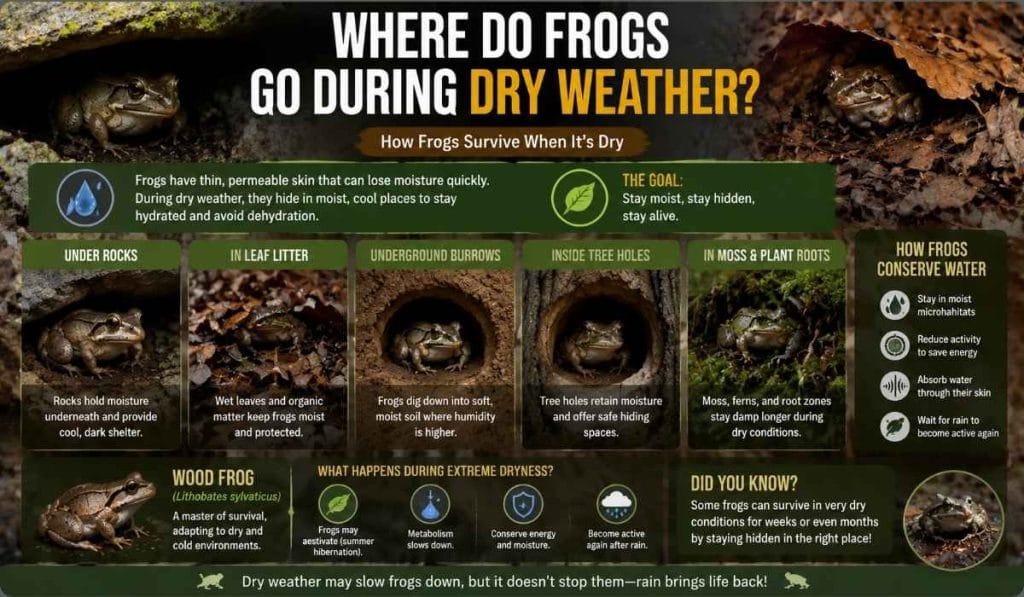
During dry weather, frogs often become difficult to find because they move away from exposed areas to protect themselves from dehydration. Since frogs depend heavily on moisture for breathing, skin health, and survival, they use different hiding strategies to avoid heat and water loss. Instead of disappearing, many frogs enter a resting state until suitable wet conditions return. Although frogs enjoy wet weather, they must protect themselves during dry conditions. Many frogs hide under leaves, soil, rocks, or shaded areas to prevent water loss. Their body structure helps them survive changing environments. Explore Frog Anatomy: Complete Guide to Frog Body Parts and Internal Organs to understand frog adaptations.
Frogs Hide in Moist Places During Dry Periods
When rainfall decreases, frogs search for locations that can maintain humidity and provide protection from extreme temperatures. Common hiding places include:
- Under rocks: Rocks provide cool, shaded spaces where moisture remains trapped. Many frogs hide beneath rocks during hot and dry periods to reduce water loss.
- Leaf litter: Layers of fallen leaves create a damp environment and help frogs stay protected from sunlight, predators, and dry air.
- Soil burrows: Many frog species dig into soft soil or use existing underground holes to escape dry conditions. The deeper soil layers usually contain more moisture than the surface.
- Tree holes: Tree-dwelling frogs may hide inside tree cavities where humidity levels remain higher. These shelters protect them from drying winds and high temperatures.
How Frogs Survive Without Rain
Frogs have developed several adaptations that allow them to survive periods without rainfall. Their first strategy is water conservation. Many frogs reduce movement and remain inactive to lower energy use and prevent excessive moisture loss. Some species enter a temporary resting condition called dormancy, where their metabolic activity decreases during unfavorable conditions. This allows them to survive long periods when food and water are limited. Burrowing behavior is another important survival method. By moving underground, frogs avoid direct sunlight and maintain access to cooler, more humid environments. Some frogs can also reduce water loss through specialized skin adaptations and protective mucus layers. These survival strategies allow frogs to remain hidden until rain returns and creates better conditions for feeding and reproduction.
Desert Frogs and Extreme Weather Survival
Desert environments are among the most challenging habitats for frogs because rainfall is rare and unpredictable. However, some species have remarkable adaptations for surviving extreme dryness. Desert rain frogs spend most of their lives hidden beneath sand or soil. They emerge only when moisture levels increase, especially after rainfall, to feed and reproduce. Spadefoot frogs are another example of desert survivors. They use their specialized digging structures to quickly burrow underground and escape harsh conditions. After heavy rain, they emerge from their underground shelters, breed rapidly, and take advantage of temporary pools. Many desert frogs survive dry periods through estivation, a summer dormancy state similar to hibernation. During estivation, frogs reduce their activity and metabolism, allowing them to survive months without rain. Therefore, frogs do not simply wait for rain—they use complex survival strategies to endure dry weather and quickly return to activity when wet conditions arrive.
Do Frogs Predict Rain?
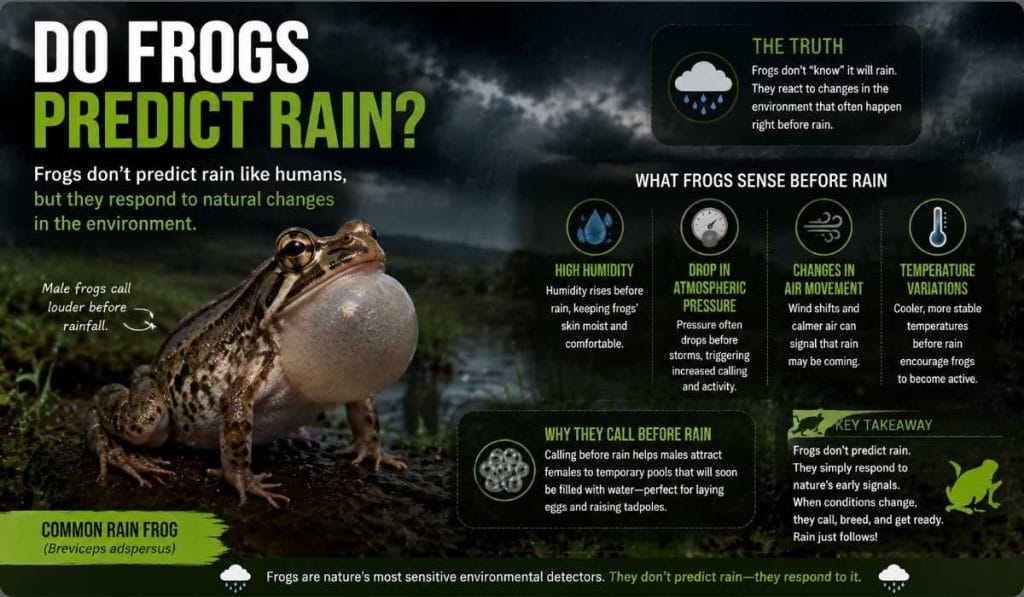
Many people believe that frogs can predict rain because they often become louder or more active before a storm arrives. While frogs do not actually forecast weather like a meteorologist, their sensitive bodies can respond to environmental changes that often occur before rainfall. Many people believe frogs can predict rain because they often appear before or after rainfall. However, frogs mainly respond to changes in humidity, temperature, and environmental conditions. These behaviors are connected to their internal body systems. Learn more about Internal Anatomy of a Frog: Organs and Body Systems Explained.
Why Frogs Sometimes Call Before Rain
Frogs may begin calling before rain because they can detect changes in humidity, temperature, and atmospheric conditions. Rising humidity makes the environment more suitable for frogs because their skin remains moist and they lose less water. Changes in atmospheric pressure and weather conditions may also influence frog activity. When frogs sense that conditions are becoming wetter, they may leave their hiding places and begin calling, especially during breeding periods. However, this behavior is not a conscious prediction of rain. Frogs are simply responding to natural environmental signals that often happen before rainfall. Their increased activity may coincide with approaching storms because those conditions create better opportunities for feeding and reproduction.
Is Frog Croaking a Real Weather Forecast?
Frog croaking is not a reliable weather forecast system. The idea that frogs can predict rain is mostly a traditional belief based on observations of their behavior before storms. The scientific explanation is that frogs respond to changes in moisture, temperature, pressure, and breeding conditions. These environmental factors may happen before rainfall, making it appear that frogs “know” rain is coming. Therefore, frogs do not predict rain, but they are excellent indicators of changing environmental conditions. Their calls can tell us that the habitat is becoming wetter and more suitable for frog activity, but they cannot accurately forecast when or how much rain will occur.
Rain and Frog Habitat Connection
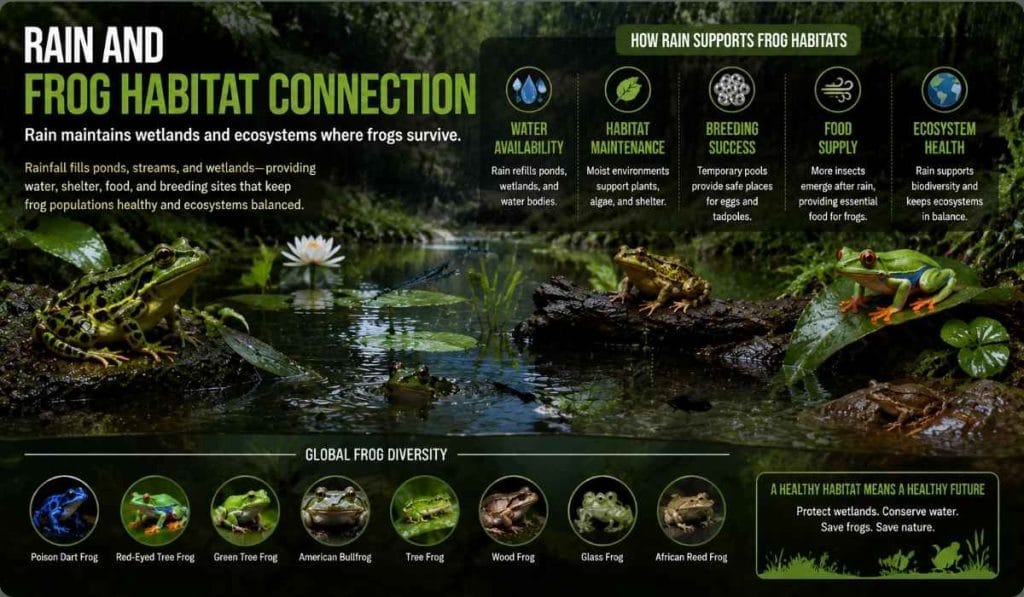
Rain is one of the most important factors that maintains healthy frog habitats. Since frogs depend on water for hydration, breathing, reproduction, and food availability, changes in rainfall directly affect where they live and how they survive. Wet environments provide the resources frogs need throughout their life cycle. frog habitats around the world.
Why Frogs Need Wet Habitats
Frogs are strongly connected to water-based environments because their skin must remain moist and their eggs require water for development. Different habitats provide essential conditions for frog survival. Ponds are important breeding areas where frogs lay eggs and tadpoles grow. These water sources provide shelter, food, and protection for young frogs. Wetlands support high frog diversity because they contain moisture, plants, insects, and shallow water areas. These ecosystems provide ideal locations for feeding and reproduction. Forest streams offer cool, humid environments where many frog species find protection from heat and predators. Flowing water areas also support insects that frogs depend on for food. Backyard habitats such as gardens, ponds, and damp areas can also support frogs by providing shelter, water, and feeding opportunities, especially after rainfall.
How Rain Helps Frog Ecosystems
Rain plays a key role in maintaining the natural ecosystem that frogs depend on. Through the water cycle, rainfall replenishes ponds, streams, and wetlands, creating suitable habitats for frogs and other wildlife. Rain also supports the food chain. Increased moisture encourages the growth of plants and increases insect populations, providing frogs with more food. Since frogs are both predators and prey, they help maintain balance within ecosystems by controlling insect numbers and supporting larger animals that feed on them. Healthy rainfall patterns also improve biodiversity. When habitats contain enough water, they can support many species of frogs, insects, plants, birds, and other animals. Rain is essential for creating suitable habitats such as wetlands, ponds, forests, and streams where frogs can find shelter and reproduce. Different frog habitats support different species around the world. Read Where Do Frogs Live? Complete Guide to Frog Habitats Around the World for more details.
What Happens When Rainfall Patterns Change?
Changes in rainfall patterns can seriously affect frog populations. Climate change is altering the timing, amount, and frequency of rainfall in many regions. Unpredictable weather can make breeding seasons shorter or prevent frogs from finding suitable water sources. Drought conditions are especially harmful because ponds and temporary pools may dry before tadpoles complete development. Without enough moisture, frogs face dehydration, reduced food availability, and lower survival rates. Habitat loss caused by drying wetlands, deforestation, and human development further reduces safe places for frogs to live and reproduce. Because frogs are highly sensitive to environmental changes, they are often considered indicators of ecosystem health. Protecting water sources and maintaining natural habitats are essential for conserving frog populations and the ecosystems they support.
How Rain Affects Different Frog Species

Different frog species respond to rainfall in unique ways depending on their habitat, climate, and biological adaptations. While most frogs benefit from increased moisture, the way they use rainy conditions varies greatly between aquatic, forest, tropical, and desert species. Different frog species react differently to rainfall depending on their size, habitat, and physical features. Some species become active immediately after rain, while others remain hidden. A frog’s survival depends on its unique body design. Check Internal Frog Anatomy: Understanding the Hidden Parts of a Frog to learn more.
| Frog Species | Common Habitat | Rain Response | Special Adaptation |
| American Bullfrog | Ponds and lakes | Becomes more active and produces calls after rain, especially during breeding periods | Strong swimmer and adapted for aquatic habitats |
| Red-Eyed Tree Frog | Tropical rainforests | Shows increased movement during wet nights and searches for food on vegetation | Moisture-dependent skin and excellent climbing ability |
| Wood Frog | Forest wetlands | Becomes active and breeds during rainy and moist seasonal periods | Cold tolerance and ability to survive in cooler environments |
| Poison Dart Frog | Rainforest floor | Remains active in high humidity and uses wet conditions for feeding and reproduction | Highly moisture-dependent skin and adaptation to humid forests |
| Desert Rain Frog | Dry desert regions | Emerges from underground shelters after rainfall to feed and reproduce | Underground survival and ability to endure long dry periods |
Rain affects each frog species according to its ecological needs. Aquatic frogs, such as American Bullfrogs, use rainfall to improve breeding conditions in ponds and lakes. Tropical species depend on high humidity to maintain skin moisture, while desert frogs rely on rare rainfall events as opportunities for survival and reproduction. These differences show how frogs have evolved specialized adaptations to use rain effectively in their environments.
Benefits of Rain for Frogs and Ecosystems
Rain provides essential benefits for frogs and the ecosystems they live in. By increasing water availability, supporting food sources, and creating breeding opportunities, rainfall helps maintain healthy frog populations and balanced natural environments.
Rain Supports Frog Population Growth
One of the biggest benefits of rain is that it improves breeding success. Many frog species depend on rainfall to create suitable breeding habitats such as ponds, puddles, wetlands, and temporary pools. These water sources allow frogs to mate and provide safe places for females to lay eggs. Rain also increases tadpole survival. Young tadpoles need water to develop into adult frogs, and consistent moisture prevents breeding pools from drying too quickly. When water remains available, tadpoles have more time to grow and complete metamorphosis. As more frogs successfully reproduce, rainfall helps create new generations and supports stable frog populations. Healthy frog populations are important because they contribute to biodiversity and maintain natural ecosystem functions.
Frogs Help Maintain Ecosystem Balance After Rain
After rain, frogs play an important role in maintaining ecosystem balance. As predators, frogs help control insect populations by feeding on mosquitoes, flies, beetles, and other small organisms. This natural insect control helps prevent excessive insect growth in many habitats. Frogs are also a vital part of the food chain. They consume insects and become food for birds, snakes, mammals, and other predators. Their presence helps transfer energy between different levels of the ecosystem. Because frogs are highly sensitive to changes in water quality, temperature, and habitat conditions, they are considered important environmental indicators. A healthy frog population often suggests that an ecosystem has clean water and suitable environmental conditions. Therefore, rain benefits not only frogs but also the wider environment. By supporting frog survival and reproduction, rainfall helps maintain biodiversity and keeps ecosystems functioning properly.
How to Attract Frogs After Rain in Your Garden
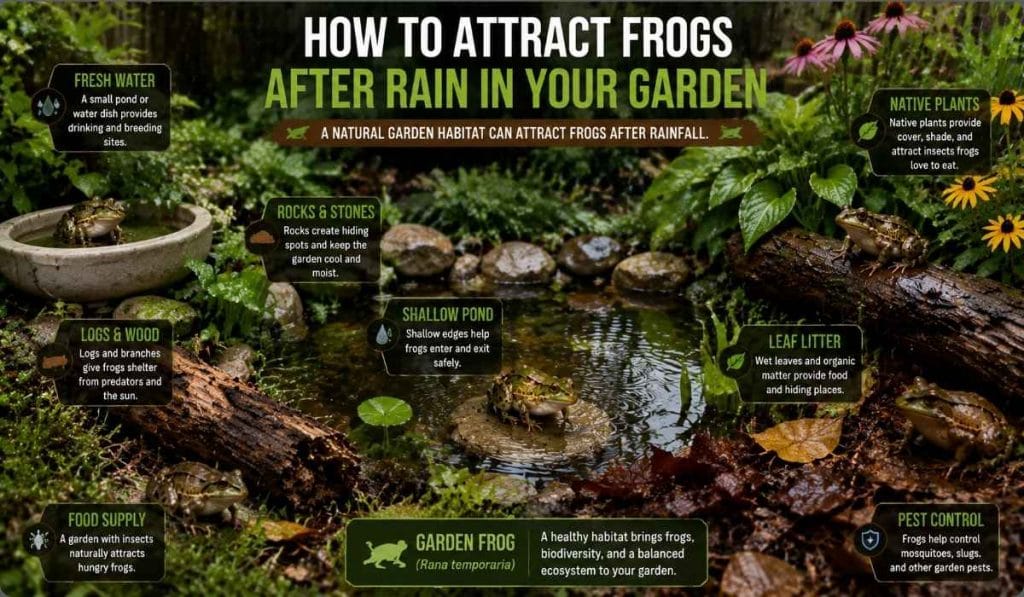
Rain creates ideal conditions for frogs, and you can encourage them to visit your garden by creating a safe and natural habitat. A frog-friendly garden provides water, shelter, and protection from harmful chemicals. f you want to attract frogs after rain, provide clean water sources, plants, shade, and natural hiding places. A frog-friendly garden can create a safe environment for local frog species. Understanding their water needs can help you create a better habitat. Read Do Frogs Drink Water? How Frogs Absorb Water Through Their Skin.
Create a Frog-Friendly Water Source
The most important feature for attracting frogs is a reliable water source. A small pond can provide frogs with a place to drink, hide, breed, and lay eggs. Even a simple garden pond with aquatic plants can become a valuable habitat. A bird bath-style water area can also help attract frogs, especially in gardens without enough natural water sources. The water should be kept clean and refreshed regularly to prevent harmful bacteria growth. When creating a frog water area, maintaining a safe water depth is important. Shallow sections allow frogs to enter and exit easily, while deeper areas provide protection from predators and extreme temperatures.
Avoid Chemicals That Harm Frogs
Frogs have sensitive, permeable skin that can absorb harmful substances from their surroundings. Using pesticides in gardens can reduce insect populations and expose frogs to toxic chemicals. Excessive fertilizers may also harm frogs by contaminating water sources and changing the natural balance of the habitat. Chemical runoff can damage ponds and reduce the quality of breeding areas. Avoiding pollution and choosing natural gardening methods helps create a safer environment where frogs can survive and reproduce.
Provide Natural Shelter
Frogs need hiding places to protect themselves from predators, heat, and dry conditions. Adding plants such as native grasses, shrubs, and ground cover provides shade and moisture. Rocks create cool hiding spaces where frogs can rest during the day. Logs and fallen branches offer additional shelter and attract insects that frogs feed on. Leaving some leaf litter in garden areas is also beneficial because it maintains humidity, supports small insects, and provides natural cover. By combining water, chemical-free gardening, and natural shelters, you can transform your garden into a welcoming habitat where frogs can thrive after rainfall.
How Rain Benefits Frogs and Ecosystems
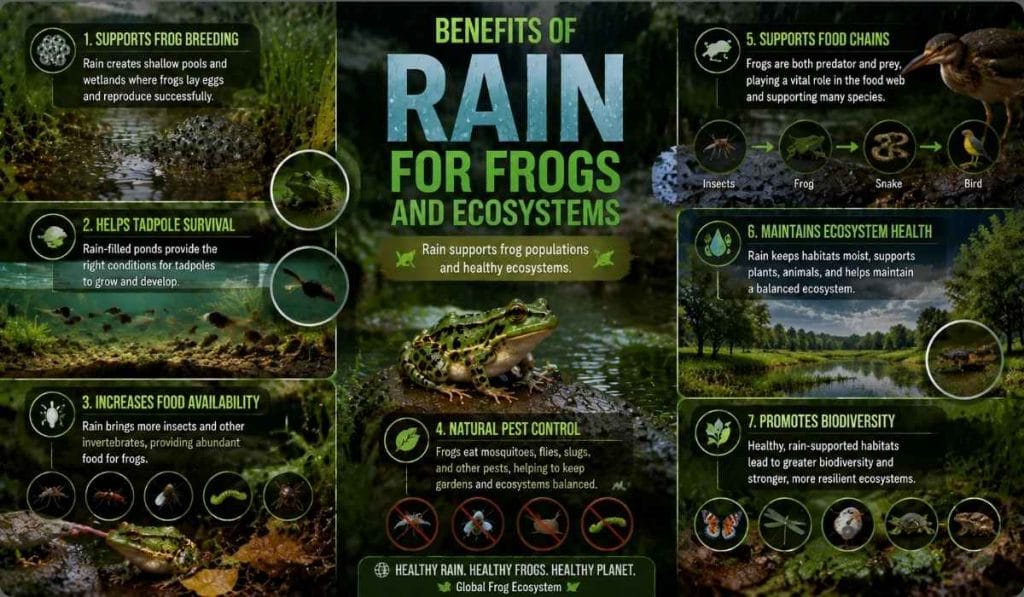
Rain helps frogs by increasing food availability and improving their living conditions. After rainfall, insects become more active, giving frogs better opportunities to feed. Learn what frogs eat and how their feeding habits work in our guide: What Do Frogs Eat? Complete Frog Diet and Feeding Guide.
| Topic | How Rain Helps Frogs | Importance |
|---|---|---|
| Rain as a Survival Trigger | Rain increases humidity, keeps frog skin moist, reduces dehydration, and encourages frogs to leave hiding places. | Helps frogs survive, move safely, feed, and reproduce. |
| Importance of Wetlands | Wetlands, ponds, streams, and temporary pools provide water for breeding, egg laying, and tadpole development. | Supports frog life cycles and maintains biodiversity. |
| Breeding and Population Growth | Rain creates suitable breeding conditions, allowing frogs to mate and produce new generations. | Increases frog population stability and species survival. |
| Frogs as Ecosystem Indicators | Frogs are sensitive to pollution, habitat changes, and water quality variations. | Healthy frog populations indicate a balanced ecosystem. |
| Food Chain Balance | Rain increases insects and other prey, helping frogs feed while also providing food for predators that eat frogs. | Maintains natural food web relationships. |
| Protecting Frog Habitats | Conserving wetlands, reducing pollution, and creating frog-friendly gardens provide safe environments. | Helps prevent frog population decline and habitat loss. |
| Climate Change Awareness | Changing rainfall patterns, droughts, and extreme weather can affect frog breeding and survival. | Highlights the need for climate action and habitat conservation. |
Frequently Asked Questions About Frogs and Rain

Do frogs like rain?
Yes, most frogs like rain because wet weather creates the ideal conditions they need for survival. Frogs are amphibians with moist, sensitive skin that requires regular moisture to stay healthy. Rain increases humidity and provides the water frogs need to absorb through their skin and maintain hydration. Rain also creates better conditions for movement, feeding, and reproduction. During dry periods, many frogs hide to prevent water loss. When rain arrives, they become more active because the environment becomes safer and more suitable for their lifestyle. However, not all frogs respond to rain in the same way. Species that live in dry environments may only become active after rainfall, while aquatic frogs may remain active throughout the year. Frogs do not drink water like humans. Instead, they absorb moisture through their skin. Learn more about Do Frogs Drink Water? How Frogs Absorb Water Through Their Skin.
Why do frogs come out after rain?
Frogs come out after rain because wet conditions provide several advantages. The moisture from rainfall prevents their skin from drying out and allows them to move safely across surfaces. After rain, insects and other small prey become more active, providing frogs with better feeding opportunities. Rain also creates temporary pools and wet areas where many frogs can reproduce and lay eggs. Another reason frogs appear after rain is that they use rainy conditions to travel between habitats. The cool, humid environment reduces the risk of dehydration while moving. Many frogs become active at night because the cooler and wetter environment helps them survive and search for food. Their body functions are explained in Frog Anatomy Diagram: A Complete Labeled Guide to Frog Structure.
Why are frogs louder after rainfall?
Frogs often become louder after rainfall because rain creates ideal breeding conditions. Male frogs use their calls to attract females and communicate with other frogs. Many frog species depend on temporary water sources created by rain for reproduction. Calling after rainfall helps males find mates when conditions are suitable for laying eggs. Rain also reduces background noise from predators and makes the environment more favorable for communication. This is why people often hear loud frog calls during rainy nights.
Do frogs know when it will rain?
Frogs do not predict rain like humans predict weather, but they can sense environmental changes that often happen before rainfall. Frogs are sensitive to:
- Changes in humidity
- Temperature changes
- Atmospheric pressure changes
- Moisture levels in the environment
These signals may encourage frogs to become more active before a storm arrives. This is why people sometimes notice frogs calling or moving around before rain begins. Their behavior is based on natural environmental signals rather than actual weather prediction.
Why do frogs appear suddenly after rain?
Frogs often seem to appear suddenly after rain because they were already nearby but hidden from view. During dry weather, frogs hide in places such as:
- Underground burrows
- Leaf piles
- Under rocks and logs
- Dense vegetation
- Moist soil
When rain arrives, they leave these shelters to search for food, find mates, and explore wet areas. Their sudden appearance is a normal survival behavior, not a sign that they came from nowhere.
Where do frogs hide before rain?
Before rain, frogs usually stay in protected, moist locations where they can avoid drying out. Common hiding places include:
- Under leaves and plant debris
- Inside soil cracks
- Beneath rocks
- Near ponds and streams
- Under logs and tree roots
Some frogs may burrow underground during dry conditions and wait until moisture levels increase. These hiding behaviors help them conserve water and survive unfavorable weather.
Are frogs more active during rainy weather?
Yes, many frogs become more active during rainy weather because the conditions are suitable for movement, feeding, and breeding. Wet environments allow frogs to move without losing too much water through their skin. Rain also increases insect activity, giving frogs more opportunities to find food. Many species use rainy periods as breeding seasons because temporary water sources appear, providing safe places for eggs and tadpoles to develop.
Does rain help frogs breathe?
Rain indirectly helps frogs breathe by keeping their skin moist. Frogs can exchange gases through their skin, and moisture is necessary for this process. A dry environment can make it difficult for frogs to absorb oxygen through their skin. Rain increases humidity and keeps their skin hydrated, allowing normal respiration. Although frogs also use their lungs, skin breathing is an important part of their survival, especially when they are underwater or resting.
Why do frogs leave their hiding places after rain?
Frogs leave their hiding places after rain because the environment becomes safer and more resource-rich. After rainfall, frogs may come out to:
- Search for insects
- Find mates
- Lay eggs
- Move between habitats
- Restore body moisture
The wet conditions reduce the danger of dehydration and allow frogs to remain active for longer periods.
Do frogs need rain to survive?
Frogs do not necessarily need rain every day, but most species depend on moisture to survive. Water is essential for maintaining their skin, breathing, temperature regulation, and reproduction. Some frogs have special adaptations that allow them to survive dry periods by hiding underground or reducing activity. However, regular access to moisture is important for long-term survival. Rain plays a major role in supporting frog populations by providing water sources, increasing food availability, and creating breeding habitats. This is why rainy seasons often bring noticeable increases in frog activity.
Final Thoughts: Why Rain Is Important for Frogs

Rain is much more than just a weather event for frogs—it is a critical survival trigger that influences their behavior, reproduction, and ecosystem role. When rainfall arrives, it creates the moisture-rich conditions frogs need for breathing, movement, feeding, and breeding. From small backyard species to rainforest frogs, wet weather provides opportunities for survival and population growth. Wetlands, ponds, streams, and other water-based habitats are especially important because they support every stage of the frog life cycle. These environments provide places for adults to reproduce, safe areas for eggs and tadpoles to develop, and abundant food sources. Protecting these habitats is essential for maintaining healthy frog populations. Frogs also play an important role as ecosystem indicators. Because their sensitive skin quickly responds to changes in water quality, pollution, and climate conditions, changes in frog populations can reveal problems within an ecosystem. A healthy frog community often indicates a balanced and functioning environment. However, changing rainfall patterns caused by climate change are creating new challenges for frogs worldwide. Longer droughts, unpredictable rainfall, and habitat destruction can reduce breeding opportunities and threaten many species. Protecting natural water sources, reducing pollution, and preserving frog habitats can help ensure that frogs continue to thrive. By protecting frogs, we also protect the larger ecosystems that depend on them. Rain connects frogs to nature, and maintaining healthy environments ensures this important relationship continues for future generations.
Related Frog Guides
- Do Frogs Drink Water? How Frogs Absorb Water Through Their Skin
- Where Do Frogs Live? Complete Guide to Frog Habitats Around the World
- What Do Frogs Eat? Complete Frog Diet and Feeding Guide
- Internal Frog Anatomy: Understanding the Hidden Parts of a Frog
- Internal Organs of a Frog: Complete List and Their Functions
- Internal Anatomy of a Frog: Organs and Body Systems Explained
- Frog Anatomy Diagram: A Complete Labeled Guide to Frog Structure
- Frog Anatomy: Complete Guide to Frog Body Parts and Internal Organs
- Digestive System of a Frog: Organs, Functions, and Process Explained