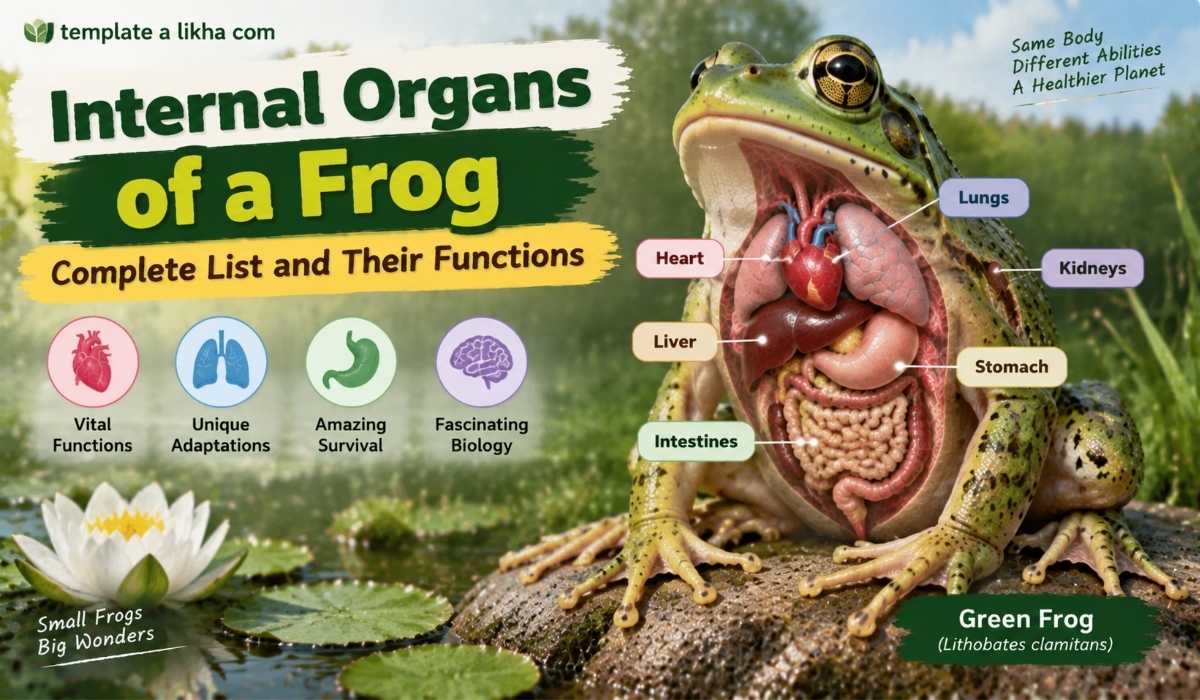
Frogs may look simple from the outside, but their internal anatomy reveals a highly specialized body designed for survival in both aquatic and terrestrial environments. Internal Frog Anatomy: Understanding the Hidden Parts of a Frog explores the important organs and body systems that allow frogs to breathe, digest food, circulate blood, reproduce, and respond to their surroundings. Inside a frog’s body are essential organs such as the heart, lungs, liver, stomach, intestines, kidneys, brain, and reproductive organs. Each structure plays a unique role in maintaining the frog’s health and helping it adapt to changing environments. Unlike humans, frogs have several fascinating adaptations, including a three-chambered heart, skin-based respiration, and specialized organs that support life in water and on land. This guide provides a detailed look at the hidden parts of a frog, explaining how each organ works and how different systems are connected. Whether you are a student, nature enthusiast, or simply curious about amphibians, understanding frog internal anatomy offers a deeper appreciation of these remarkable creatures and their evolutionary adaptations.
Inside a Frog’s Body: Understanding the Hidden Internal World

A frog’s external appearance may seem simple, but beneath its skin lies a complex network of organs and systems that help it survive in diverse environments. The internal anatomy of a frog shows how these amphibians are perfectly adapted for life between water and land. Every organ, from the heart and lungs to the digestive tract and nervous system, has a specific role in maintaining balance and supporting daily activities. Unlike many animals that live only in one environment, frogs must adapt to both aquatic and terrestrial conditions. Their internal structures allow them to breathe, move, find food, escape predators, and reproduce successfully. Studying the hidden internal world of frogs helps us understand how different body systems evolved together to support survival. Frogs have a unique body structure that allows them to survive in both aquatic and terrestrial environments. To understand the complete structure of a frog, explore our Frog Anatomy: Complete Guide to Frog Body Parts and Internal Organs, where we explain the major body parts and internal structures in detail.
Why Frog Internal Anatomy Is Scientifically Interesting
Frogs are fascinating animals because they represent the connection between aquatic and terrestrial life. As amphibians, they begin their lives in water as tadpoles and later develop features that allow them to live on land. Their internal anatomy reflects this unique transition and shows millions of years of evolutionary adaptation. Scientists study frogs because their body systems provide valuable information about evolution, physiology, environmental changes, and animal development. Frog organs share similarities with many vertebrates, including humans, making them useful in biological and medical research. Their ability to breathe through both lungs and skin, survive in changing habitats, and undergo dramatic life-cycle changes makes them important subjects for scientific studies. Research on frog anatomy also helps scientists understand ecosystem health because frogs are sensitive indicators of environmental changes. Changes in their internal functions can reveal the effects of pollution, climate change, and habitat loss.
How Different Internal Systems Work Together
A frog’s survival depends on the cooperation of multiple internal systems working together. The circulatory system, respiratory system, and skin play important roles in supplying oxygen throughout the body. A frog’s three-chambered heart pumps blood to deliver oxygen and nutrients, while its lungs and moist skin help with respiration. The digestive system breaks down insects and other prey into nutrients that provide energy for movement, growth, and reproduction. Organs such as the stomach, liver, and intestines work together to process food and absorb essential nutrients. The nervous system, including the brain and sensory organs, controls movement, hunting, and responses to danger. When a predator approaches, the frog’s brain quickly processes information and triggers escape behaviors such as jumping or hiding. Together, these interconnected systems allow frogs to survive efficiently in challenging environments. Their internal anatomy demonstrates how every organ contributes to maintaining life and adapting to nature.
How Frogs Breathe: The Amazing Internal Process of Oxygen Exchange

Frogs have one of the most unique respiratory systems among vertebrates because they can breathe in more than one way. Unlike humans, who mainly depend on their lungs, frogs use both their lungs and their skin to obtain oxygen. This ability allows them to survive in different environments, including ponds, forests, wetlands, and grasslands. A frog’s respiratory system changes throughout its life. Tadpoles mainly breathe using gills while living in water, but as they develop into adult frogs, they lose their gills and develop lungs. However, even adult frogs continue to use their skin as an important respiratory surface. This combination of lung breathing and skin respiration gives frogs the flexibility they need to live both on land and in water. Understanding how frogs exchange oxygen reveals how their internal organs are adapted for survival and why maintaining healthy skin is essential for their life. A frog’s breathing system is one of its most fascinating adaptations because it uses both lungs and skin for oxygen exchange. To learn more about how frog organs and body systems work together, read our detailed guide on Internal Anatomy of a Frog: Organs and Body Systems Explained.
Why Frogs Use Both Lungs and Skin for Respiration
Adult frogs use two main methods of respiration: cutaneous respiration (breathing through the skin) and lung breathing. Cutaneous respiration occurs when oxygen from the surrounding environment passes directly through the frog’s thin, moist skin and enters the bloodstream. Carbon dioxide, a waste gas produced by the body, moves out through the same pathway. Skin respiration is especially important when frogs are underwater, resting, or hiding from predators. Since frogs have highly permeable skin with many blood vessels, they can absorb oxygen without actively breathing through their lungs. However, lungs are also necessary, especially when frogs are active on land. During activities such as jumping, hunting, or escaping predators, frogs need more oxygen than their skin alone can provide. Their lungs allow them to take in larger amounts of oxygen quickly. Using both systems gives frogs an advantage. Lung breathing provides efficient oxygen intake during high-energy activities, while skin respiration allows continuous gas exchange during quiet periods or underwater conditions. This dual respiratory system is one of the key adaptations that helps frogs survive in changing habitats.
How Oxygen Travels Inside a Frog’s Body
After oxygen enters a frog’s body through the lungs or skin, it moves into tiny blood vessels called capillaries. From there, oxygen attaches to hemoglobin inside red blood cells and is transported throughout the body. The frog’s heart plays an important role in distributing oxygen-rich blood to different organs and tissues. Although a frog has a three-chambered heart, it can effectively circulate blood and deliver oxygen needed for movement, digestion, growth, and other body functions. At the cellular level, oxygen is used to produce energy through cellular respiration. This energy supports essential activities such as muscle movement, hunting, and maintaining body functions. Carbon dioxide produced during this process is carried back through the blood and removed through the lungs or skin.
Why Frogs Cannot Survive With Dry Skin
A frog’s skin is not only a protective covering but also an important respiratory organ. For oxygen exchange to occur, the skin must remain moist because gases can only move efficiently through a wet surface. When a frog’s skin becomes dry, oxygen cannot pass through it effectively, reducing the amount of oxygen entering the bloodstream. Severe dehydration can prevent proper respiration and may become life-threatening. This is why frogs are usually found in moist environments and why they avoid dry conditions. Their dependence on skin respiration makes moisture essential for survival.
How a Frog’s Heart Works: The Science Behind Amphibian Circulation

A frog’s circulatory system is a remarkable example of evolutionary adaptation. Although frogs have a simpler heart structure compared with mammals, their cardiovascular system is highly efficient for supporting life in both aquatic and terrestrial environments. The frog’s heart works together with the lungs, skin, and blood vessels to deliver oxygen and nutrients throughout the body while removing carbon dioxide and other waste products. Unlike humans and other mammals, frogs do not have a completely separated circulation system. Their unique heart structure allows them to survive with a combination of lung breathing and skin respiration. This specialized design reflects their amphibious lifestyle and their ability to function in different habitats. The frog heart is an important part of its internal survival system, working with other organs to transport oxygen throughout the body. Explore the complete list of frog organs and their roles in our guide Internal Organs of a Frog: Complete List and Their Functions.
Why Frogs Have a Three-Chambered Heart
An adult frog has a three-chambered heart consisting of two atria and one ventricle. The two upper chambers, called the right and left atria, receive blood from different parts of the body. The right atrium receives oxygen-poor blood returning from the body, while the left atrium receives oxygen-rich blood from the lungs and skin. Both atria empty into a single lower chamber called the ventricle. Unlike mammals, frogs do not have a separate left and right ventricle, so some mixing of oxygenated and deoxygenated blood occurs. This heart structure is an evolutionary adaptation that matches the frog’s lifestyle. Since frogs can absorb oxygen through their skin as well as their lungs, they do not require a completely separated circulation system like mammals. Their three-chambered heart provides enough efficiency while maintaining a simpler design that evolved over millions of years.
How Blood Moves Through a Frog’s Body
Blood circulation in frogs involves two major pathways: pulmonary circulation and systemic circulation. Pulmonary circulation carries blood between the heart and the lungs or skin for oxygen exchange. When oxygen-poor blood reaches the heart, it is pumped toward the lungs and skin, where it absorbs oxygen and releases carbon dioxide. The oxygen-rich blood then returns to the left atrium and enters the ventricle. From the ventricle, blood is pumped to the rest of the body through arteries. It delivers oxygen and nutrients to organs, muscles, and tissues before returning as oxygen-poor blood through veins. Although some mixing occurs inside the ventricle, frogs have adaptations that help reduce excessive mixing. The structure of the ventricle and the timing of heart contractions allow the frog to distribute oxygen effectively. This circulation system supports important activities such as jumping, hunting, digestion, and reproduction. It also allows frogs to survive during periods when oxygen availability changes, such as underwater conditions or low-activity periods.
Frog Heart Compared With Mammals
A frog’s heart differs significantly from the mammalian heart. Humans and other mammals have a four-chambered heart with two atria and two ventricles, creating complete separation between oxygen-rich and oxygen-poor blood. Frogs, however, have only one ventricle, which allows partial mixing of blood. While this system is less efficient than the mammalian system, it is well suited for amphibians because they use both lungs and skin for respiration. The frog heart represents an important evolutionary stage between simpler aquatic vertebrates and more advanced terrestrial animals.
Inside Frog Digestion: How a Frog Converts Food Into Energy
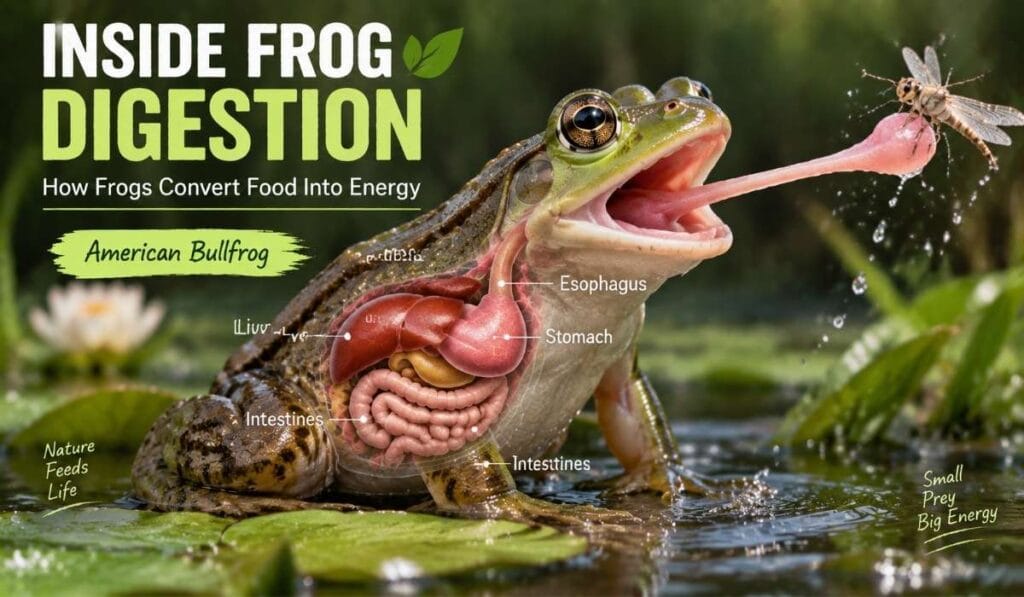
A frog’s digestive system is specially designed to process the types of food it consumes and convert them into energy needed for survival. Most frogs are carnivorous and feed on insects, worms, small fish, spiders, and other small animals. Their digestive process begins the moment they capture prey and continues through a series of organs that break down food, absorb nutrients, and remove waste. Unlike mammals, frogs usually swallow their food whole rather than chewing it. Their digestive system relies on powerful enzymes and specialized organs to break down prey and extract essential nutrients. These nutrients provide energy for movement, growth, reproduction, and maintaining body functions. The efficiency of frog digestion allows these amphibians to survive in different habitats where food availability can change throughout the year. Food digestion depends on several internal organs working together, including the stomach, liver, and intestines. Learn more about these structures in our article Internal Organs of a Frog: Complete List and Their Functions.
How Frogs Capture Food Before Digestion Begins
Before digestion starts, frogs must successfully capture their prey. Most frogs are ambush predators that remain still and wait for suitable prey to come within reach. When an insect or small animal moves nearby, the frog quickly extends its long, sticky tongue to catch it. A frog’s tongue is attached near the front of its mouth, allowing it to flip outward rapidly and capture prey in a fraction of a second. The sticky surface helps hold the prey securely, preventing escape. Some larger frogs may also use their powerful jaws to catch bigger prey. After capturing food, frogs usually swallow it whole because they do not have teeth designed for chewing. Their eyes also help push food down by moving inward when they swallow. This unique feeding behavior allows frogs to consume prey quickly and return their attention to avoiding predators.
What Happens Inside the Digestive Tract
Once food enters the mouth, it moves through the esophagus into the stomach. The stomach produces digestive acids and enzymes that begin breaking down proteins and other components of the prey. This process transforms large food particles into smaller molecules that the body can absorb. From the stomach, partially digested food moves into the small intestine, where most nutrient absorption occurs. The pancreas releases digestive enzymes, while the liver produces bile that helps break down fats. Nutrients such as proteins, fats, and carbohydrates are absorbed through the intestinal walls and transported into the bloodstream. The absorbed nutrients are then delivered to different parts of the frog’s body. Muscles use these nutrients for movement, while other organs use them for growth, repair, and reproduction. After useful nutrients are removed, undigested material passes into the large intestine and eventually reaches the cloaca. The cloaca is a common chamber that receives digestive waste along with materials from the urinary and reproductive systems before elimination.
How Diet Influences Frog Internal Functions
A frog’s diet directly affects the health and efficiency of its internal organs. Protein-rich prey such as insects and small animals provides essential nutrients for muscle development, energy production, and reproduction. Different diets can influence digestion speed, metabolism, and overall body condition. Frogs that receive insufficient or poor-quality food may experience reduced growth, weaker immune function, and lower survival rates. A balanced diet is therefore essential for maintaining healthy internal systems.
Frog Metamorphosis: The Incredible Transformation of Internal Organs
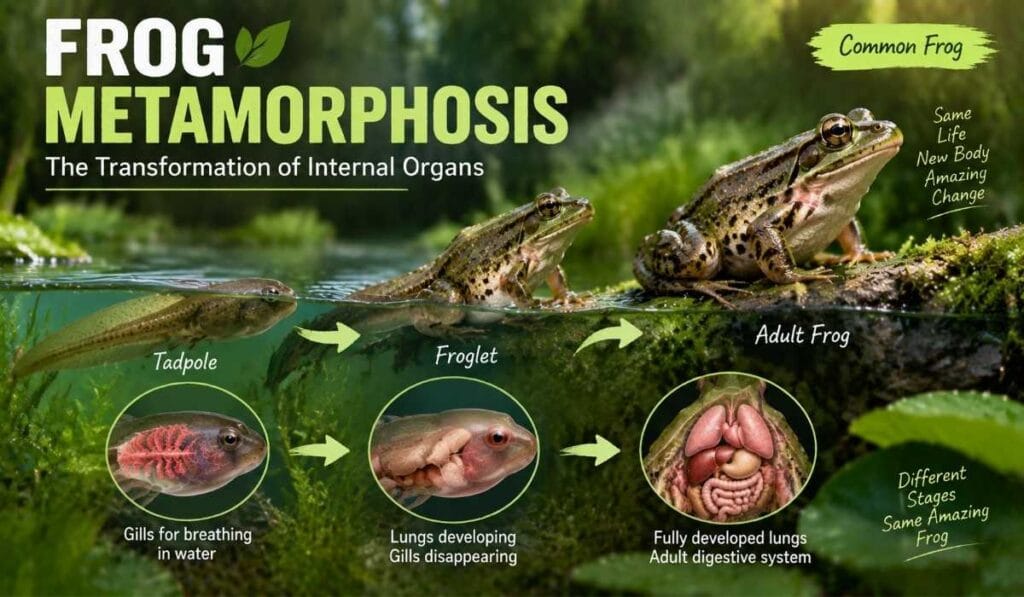
Frog metamorphosis is one of the most remarkable biological transformations in nature. During this process, a frog does not simply change its appearance; its entire internal body system is redesigned to support a completely different lifestyle. A tadpole begins life as an aquatic animal, while an adult frog becomes an amphibian capable of living both on land and in water. The transformation involves major changes in the respiratory system, digestive organs, skeletal structure, muscles, and other internal systems. These changes are controlled by complex biological signals that gradually replace the tadpole’s water-based adaptations with features needed for life on land. Understanding how frog organs transform during metamorphosis provides valuable insight into evolution, development, and the ability of animals to adapt to changing environments. Frog metamorphosis is one of nature’s most amazing transformations, where internal organs change as a tadpole develops into an adult frog. Discover each stage of this process in our guide Frog Life Cycle: From Egg to Adult Frog Explained.
How Tadpole Organs Differ From Adult Frog Organs
A tadpole’s internal anatomy is completely adapted for an aquatic lifestyle. In the early stages of development, tadpoles breathe mainly through gills, similar to fish. These gills allow them to absorb oxygen directly from water, making underwater survival possible. Another major difference is the presence of a long tail. The tadpole tail contains muscles and supports swimming, allowing the young frog to move efficiently through ponds and streams. Unlike adult frogs, tadpoles depend on their tail for movement because their legs have not yet fully developed. The digestive system of tadpoles is also different from that of adult frogs. Young tadpoles are mostly herbivorous and often feed on algae, aquatic plants, and organic material in water. Their digestive tract is designed to process plant-based food efficiently. As tadpoles grow, these organs gradually change. Their gills begin to disappear, the tail is absorbed, and the digestive system becomes adapted for a carnivorous diet. These changes prepare the developing frog for a new life stage with different nutritional and environmental demands.
How Internal Organs Change During Metamorphosis
During metamorphosis, frog organs undergo a carefully controlled transformation. One of the most important changes occurs in the respiratory system. As the tadpole prepares to leave water, its gills gradually shrink and lungs develop. These lungs allow adult frogs to breathe air on land, although they continue to use their skin for additional oxygen exchange. The digestive system also undergoes significant modification. Since tadpoles mainly consume plant material, their digestive tract is longer and specialized for processing vegetation. When they become adults and begin eating insects and other animals, the digestive system becomes shorter and better suited for a protein-rich carnivorous diet. The nervous system, muscles, and skeleton also develop during this period. Hind legs and front legs appear, muscles strengthen, and the body becomes prepared for jumping and terrestrial movement. All these changes are controlled by hormones, especially thyroid hormones. These chemical signals act like biological instructions, triggering the breakdown of old structures and the development of new ones. For example, thyroid hormones stimulate tail absorption, lung maturation, and changes in metabolism. This hormone-driven process ensures that every organ develops at the correct time, allowing the frog to transition successfully from an aquatic larva to a land-adapted adult.
Why Frog Metamorphosis Is Important in Biology
Frog metamorphosis is important because it demonstrates how living organisms can undergo dramatic structural and functional changes during development. It provides scientists with valuable information about evolution, genetics, hormones, and animal adaptation. Because frogs experience such a major transformation within a short period, they are widely studied in biology and environmental research. Changes in frog development can reveal the effects of pollution, climate change, and chemical exposure in ecosystems. The metamorphosis process also helps scientists understand how different body systems evolve together. The transformation of a tadpole into a frog shows how organs are not fixed structures but can adapt and change according to an animal’s lifestyle and environment. For students and nature enthusiasts, studying frog metamorphosis offers a fascinating example of how complex and organized life can be.
How Frogs Maintain Water Balance Inside Their Body
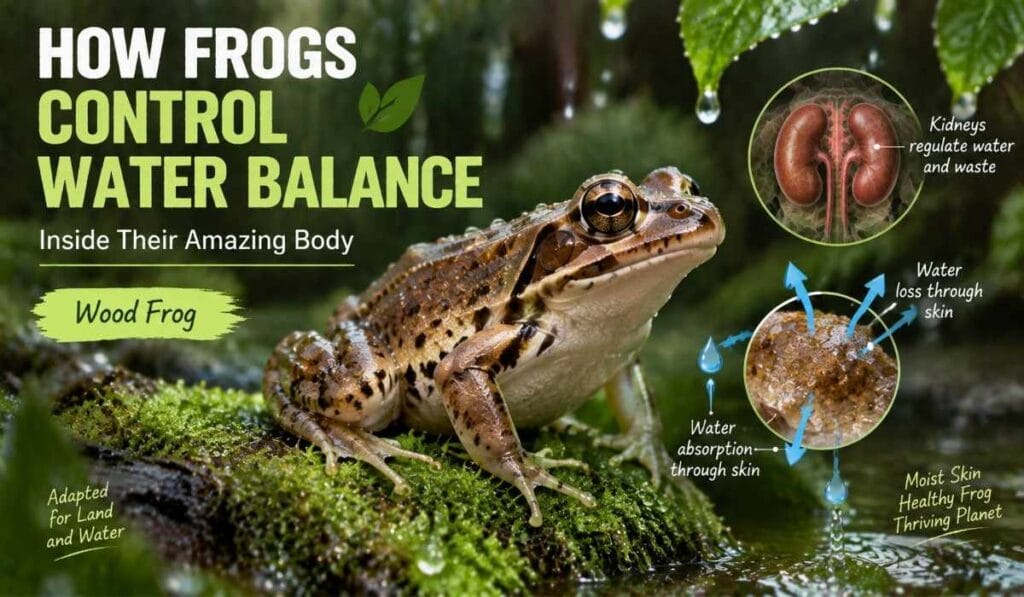
Maintaining the right amount of water inside the body is essential for frog survival. Unlike many mammals, frogs have highly permeable skin that allows water and gases to pass through easily. This special adaptation helps them breathe through their skin but also makes them vulnerable to dehydration and changes in their surroundings. Because frogs often move between aquatic and terrestrial environments, their bodies must constantly regulate water levels and remove waste efficiently. Their kidneys, skin, and hormones work together to maintain internal balance, also known as homeostasis. Maintaining water balance is essential for frog survival, especially because their skin allows water and gases to move through the body. These abilities are part of the remarkable Frog Adaptations: How Frogs Survive in Different Environments that help frogs live in changing habitats.
Why Amphibians Are Highly Dependent on Water
Frogs are highly dependent on water because their skin must remain moist for proper respiration and survival. Through cutaneous respiration, oxygen enters the body directly through the skin, but this process only works effectively when the skin surface is wet. Water also plays an important role in reproduction. Most frogs lay eggs in water because their eggs do not have a protective shell and can easily dry out. Young tadpoles also require aquatic environments because their early respiratory and digestive systems are adapted for life underwater. However, dependence on water creates challenges. Frogs living on land can lose body moisture quickly through their skin, especially in hot or dry conditions. To prevent excessive water loss, they often seek shade, hide under leaves, remain inactive during dry periods, or return to moist environments.
How Frog Kidneys Control Water and Waste
A frog’s kidneys are essential organs responsible for maintaining water balance and removing metabolic waste from the body. They filter the blood and remove nitrogen-containing waste products, mainly in the form of urine. The kidneys help regulate how much water is retained or removed depending on the frog’s environment. When living in water, frogs can absorb water through their skin and maintain balance easily. However, when living on land, their kidneys conserve water by producing more concentrated urine. Hormones also help control kidney function by adjusting water movement within the body. This allows frogs to survive changes in moisture levels and adapt to different habitats.
How This Helps Frogs Live in Different Habitats
The ability to regulate water balance allows frogs to survive in a wide range of environments, including ponds, forests, wetlands, and grasslands. Their specialized skin, kidneys, and behavioral adaptations help them avoid dehydration while maintaining essential body functions. This water regulation system is one of the key reasons frogs can successfully live both in aquatic and terrestrial ecosystems.
Frog Immune System: The Hidden Defense Mechanisms Inside Frogs

Frogs face constant exposure to bacteria, fungi, parasites, and environmental threats. To survive, they have developed a unique immune system that protects their internal organs and maintains overall health. Their defense mechanisms involve the skin, immune cells, chemical compounds, and specialized responses against infections. Although frogs appear fragile because of their sensitive skin, they possess powerful natural defenses that help them resist many harmful organisms. The frog immune system works together with protective skin and other survival features to defend against environmental threats. Learn more about these natural survival strategies in Frog Adaptations: How Frogs Survive in Different.Environments.
How Frog Skin Protects the Internal Body
A frog’s skin is more than just an outer covering; it acts as the first line of defense against harmful microorganisms. The skin contains a protective mucus layer that keeps the surface moist and creates a barrier against bacteria and parasites. This mucus also contains special antimicrobial chemicals called antimicrobial peptides. These natural substances can destroy or slow the growth of certain harmful microbes, helping prevent infections before they enter the body. The constant production of mucus allows frogs to maintain protection while still allowing oxygen exchange through their skin. This balance between respiration and defense makes frog skin one of their most important survival adaptations.
How Frogs Fight Internal Infections
If harmful organisms enter the body, frogs rely on internal immune responses to fight infections. Their immune system contains specialized cells, including white blood cells, that identify and attack invading pathogens. Immune cells can recognize foreign organisms and activate defense mechanisms to limit the spread of infection. Frogs also produce antibodies that help their bodies remember and respond to certain threats more effectively. Disease response in frogs can be influenced by environmental conditions such as temperature, pollution, and habitat quality. Stressful conditions may weaken their immune function, making them more vulnerable to diseases. The ability of frogs to fight infections is especially important because they often live in environments containing many microorganisms.
Why Frog Defense Chemicals Interest Scientists
Scientists are interested in frog defense chemicals because some antimicrobial compounds found in frog skin may have potential medical applications. Researchers study these natural substances to understand their ability to fight bacteria and other pathogens. Frog skin secretions provide valuable information for developing new treatments and studying immune protection. These discoveries show how amphibians have evolved unique defense systems that may benefit both ecological research and human medicine.
Frog Brain and Nervous System: The Control Center Inside a Frog

A frog’s nervous system acts as the main control center that coordinates movement, senses, behavior, and survival responses. Although a frog’s brain is smaller and simpler than that of many mammals, it is highly efficient for controlling the activities needed for an amphibian lifestyle. The frog nervous system consists of the brain, spinal cord, and a network of nerves that connect different organs and tissues. These structures allow frogs to process information from their environment, control muscles, detect danger, and respond quickly to changes around them. Understanding the location and structure of frog organs becomes easier with visual references. Explore our Frog Anatomy Diagram: A Complete Labeled Guide to Frog Structure to see important frog body parts and their positions.
How the Frog Brain Controls Movement and Survival
The frog brain controls essential activities such as jumping, swimming, hunting, breathing, and maintaining body functions. The brain is divided into several regions, including the cerebrum, optic lobes, cerebellum, and medulla oblongata, each performing specific roles. The optic lobes are especially important because frogs depend heavily on vision to detect moving prey and approaching predators. The cerebellum helps coordinate muscle movements, allowing frogs to perform accurate jumps and maintain balance. The brain also regulates automatic processes such as breathing, heartbeat, and digestion through the medulla oblongata. These functions allow frogs to conserve energy while maintaining essential internal activities.
How Internal Nerves Connect With Eyes and Ears
Frogs rely on their sensory organs to understand their surroundings. Nerves connect the eyes, ears, skin, and other sensory structures directly with the brain, allowing rapid processing of environmental information. The eyes of frogs are adapted for detecting movement, which helps them identify prey and avoid predators. Their large, protruding eyes provide a wide field of vision and send visual information through the optic nerves to the brain. Frogs also have specialized hearing structures, including a visible eardrum called the tympanum. Sound vibrations are converted into nerve signals and transmitted to the brain, helping frogs communicate through calls and detect nearby threats. Their skin also contains sensory receptors that detect pressure, temperature, and chemical changes in the environment.
Why Frogs Have Fast Escape Responses
Frogs are prey animals, so rapid responses are essential for survival. Their nervous system allows them to quickly detect danger and activate powerful leg muscles for immediate escape. When a predator approaches, sensory signals travel rapidly to the brain and spinal cord, triggering a jump or hiding response. This fast reaction helps frogs avoid attacks before predators can capture them.
Internal Adaptations That Help Frogs Survive

Frogs have developed numerous internal adaptations that allow them to survive in both aquatic and terrestrial environments. Their organs and body systems work together to support respiration, movement, digestion, reproduction, and defense against environmental challenges. These adaptations are the result of millions of years of evolution, allowing frogs to successfully occupy different habitats around the world. From breathing through their skin to controlling water levels inside their body, frogs have developed extraordinary survival mechanisms. Explore more examples in our guide Frog Adaptations: How Frogs Survive in Different Environments.
How Frog Organs Support Life on Land and Water
Frog organs are specially designed to handle the challenges of living between two environments. Their lungs allow them to breathe air on land, while their moist skin enables oxygen exchange in water. The heart supports circulation by transporting oxygen and nutrients throughout the body, while the kidneys regulate water balance in changing environments. Their digestive system also adapts to different food sources available in aquatic and terrestrial habitats. This combination of specialized organs allows frogs to remain active in ponds, forests, wetlands, and grasslands.
Internal Features That Help Frogs Avoid Predators
Frogs possess several internal and behavioral adaptations that improve survival against predators. Their sensory systems allow them to detect danger quickly. Large eyes, sensitive skin receptors, and strong nervous connections help them recognize threats and respond immediately. Frogs also conserve energy through their metabolism. As ectothermic animals, they rely on external temperatures to regulate body heat, reducing the energy required to maintain a constant body temperature. Their internal systems also support camouflage responses. The nervous system can influence changes in behavior and activity levels, allowing frogs to remain hidden, freeze when threatened, or move quickly when necessary.
Why Frog Anatomy Is an Evolutionary Success Story
Frog anatomy represents a successful example of adaptation and evolution. Their internal organs allow them to survive in environments that require both aquatic and terrestrial abilities. The combination of specialized respiration, circulation, digestion, and defense systems demonstrates how animals can evolve complex solutions to environmental challenges.
Frog Internal Anatomy Compared With Other Animals
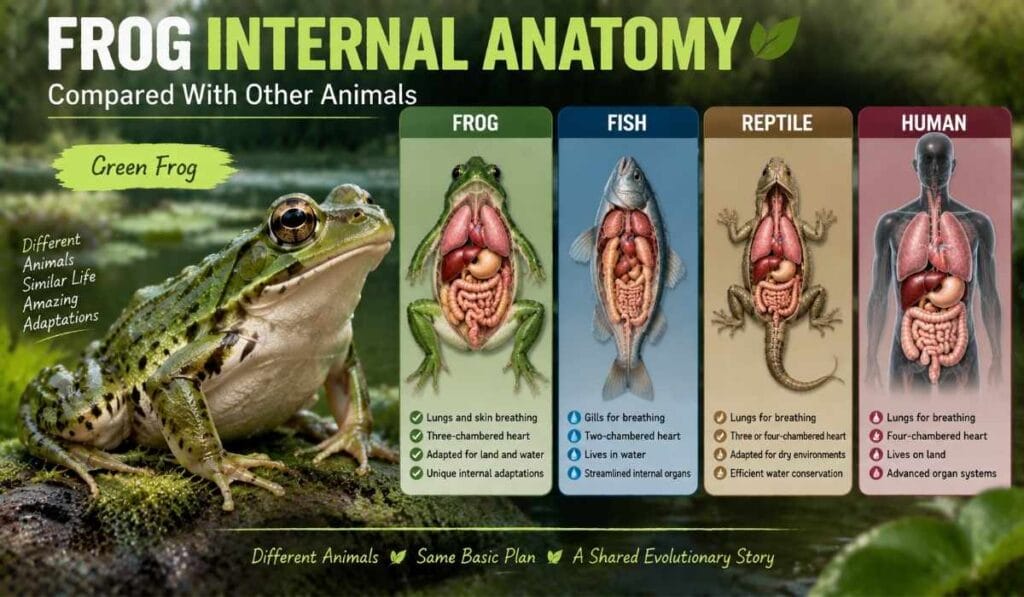
Comparing frog anatomy with other animals helps us understand how different species evolved to survive in their environments. Frogs represent an important transition between fully aquatic animals and land-based vertebrates. Their internal structures show a balance between water-dependent features and adaptations for life on land. Comparing frog anatomy with fish, reptiles, and humans helps us understand how evolution shaped different body systems. Read our complete overview in Frog Anatomy: Complete Guide to Frog Body Parts and Internal Organs.
Frog vs Fish: From Water to Land Adaptation
Fish are fully aquatic animals that rely mainly on gills for breathing. Their bodies are designed for swimming, with fins and streamlined shapes that support movement in water. Frogs begin life with fish-like characteristics as tadpoles, including gills and aquatic digestion. However, during metamorphosis, they develop lungs, legs, and other adaptations needed for terrestrial life. Unlike fish, frogs can survive outside water because of their lungs, skin respiration, and stronger limb structures.
Frog vs Reptile: Different Survival Strategies
Frogs and reptiles both live on land but use different survival strategies. Reptiles have dry, waterproof skin that reduces water loss, allowing them to live in drier environments. Frogs have moist, permeable skin that helps with respiration but makes them dependent on humid conditions. Reptiles usually have more efficient lungs and fully separated hearts, while frogs rely on their unique amphibian adaptations. These differences reflect the distinct evolutionary paths of amphibians and reptiles.
Frog vs Human: Similarities and Differences
Frogs and humans share many basic internal structures because both are vertebrates. Both have a brain, heart, lungs, kidneys, digestive organs, and reproductive systems. However, their organs are adapted differently. Humans have a four-chambered heart that completely separates oxygen-rich and oxygen-poor blood, while frogs have a three-chambered heart. Humans breathe only through lungs, whereas frogs can also exchange gases through their skin. The digestive system, nervous system, and skeletal structures also differ according to lifestyle. Humans are fully terrestrial mammals with constant body temperatures, while frogs are ectothermic amphibians adapted for life between water and land. Studying these similarities and differences helps scientists understand vertebrate evolution and how different animals develop unique survival strategies.
Frequently Asked Questions About Frog Internal Anatomy
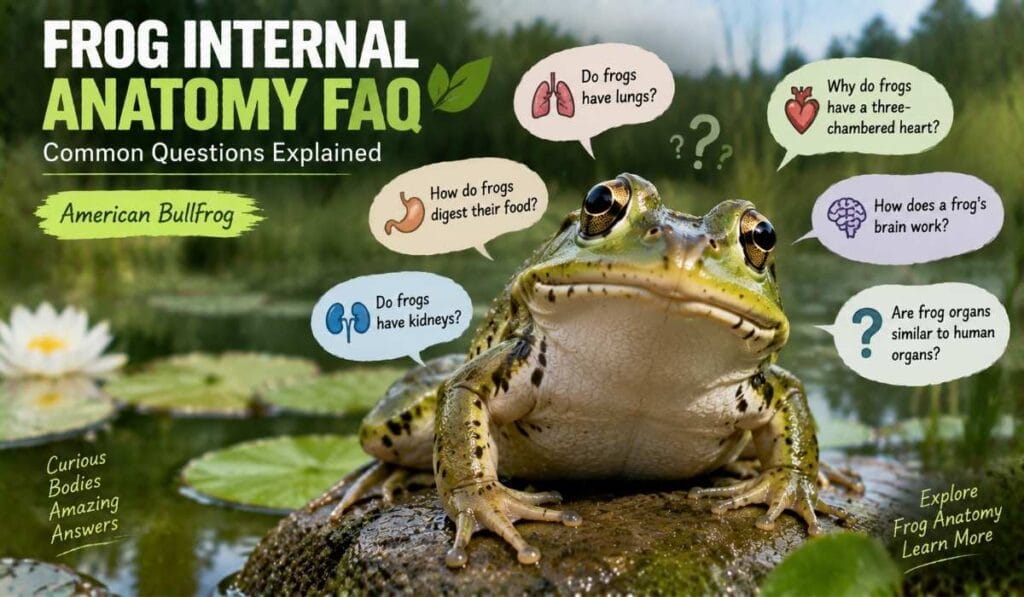
After learning about frog internal systems, readers can explore visual explanations of organs and structures through our Frog Anatomy Diagram: A Complete Labeled Guide to Frog Structure.
How many internal organs does a frog have?
A frog has many important internal organs that work together to maintain survival, including the heart, lungs, liver, stomach, intestines, kidneys, brain, reproductive organs, and urinary organs. Although frogs have fewer specialized structures compared with mammals, their organs are highly adapted for amphibious life. The major internal organ systems of a frog include the digestive system, respiratory system, circulatory system, nervous system, reproductive system, and excretory system. Each system performs specific functions, such as processing food, exchanging oxygen, transporting nutrients, controlling movement, producing offspring, and removing waste. The exact number of internal organs can vary depending on how organs are counted, but a frog’s body contains all the essential structures needed for survival. These organs are organized efficiently to help frogs live in both aquatic and terrestrial environments.
Do frogs have lungs, and how do they breathe?
Yes, adult frogs have lungs and use them to breathe air. However, unlike humans, frogs do not depend only on their lungs for respiration. They also breathe through their skin, a process known as cutaneous respiration. When a frog is active on land, its lungs provide the majority of oxygen needed for activities such as jumping, hunting, and escaping predators. Air enters through the nostrils and moves into the lungs, where oxygen passes into the bloodstream. A frog’s moist skin also absorbs oxygen directly from the environment. This method is especially important when frogs are underwater, resting, or hiding. The ability to use both lungs and skin gives frogs a unique advantage and allows them to survive in different habitats.
Can frogs breathe underwater?
Yes, frogs can breathe underwater, but the method is different from fish. Frogs do not use gills as adults; instead, they absorb oxygen through their moist skin while submerged. This process, called cutaneous respiration, allows oxygen dissolved in water to pass through the frog’s skin and enter tiny blood vessels. Carbon dioxide moves out through the same pathway. However, frogs cannot survive underwater indefinitely if oxygen levels are too low. They need access to oxygen-rich environments, and some species must regularly return to the surface or move to areas with better oxygen availability. Tadpoles, on the other hand, have gills and are specially adapted for underwater breathing during their early life stage.
Why do frogs have a three-chambered heart?
Frogs have a three-chambered heart because their amphibian lifestyle does not require the complete separation of oxygen-rich and oxygen-poor blood found in mammals. A frog’s heart contains two atria and one ventricle. The right atrium receives oxygen-poor blood from the body, while the left atrium receives oxygen-rich blood from the lungs and skin. Both chambers empty into the single ventricle. Although some mixing of blood occurs, frogs have evolved mechanisms that allow efficient oxygen delivery. Since they can also breathe through their skin, their circulation system provides enough oxygen for their needs. The three-chambered heart represents an evolutionary adaptation between fully aquatic animals and more advanced terrestrial vertebrates.
How do frog organs change during metamorphosis?
During metamorphosis, a frog undergoes one of the most dramatic internal transformations in the animal kingdom. A tadpole begins life as an aquatic organism with gills, a tail, and a digestive system designed mainly for plant-based food. As metamorphosis begins, the tadpole develops lungs, allowing it to breathe air on land. Its gills gradually disappear, and the tail is absorbed into the body. The digestive system also changes to support an adult diet of insects and other small animals. These changes are controlled mainly by thyroid hormones, which regulate the development of new organs and the breakdown of old structures. Through metamorphosis, a water-dwelling tadpole becomes a land-capable adult frog with completely different internal requirements.
Are frog organs similar to human organs?
Yes, frogs and humans share many basic internal organs because both are vertebrates. Both have a heart, lungs, brain, kidneys, stomach, intestines, and reproductive organs. However, these organs are adapted differently. Humans have a four-chambered heart, while frogs have a three-chambered heart. Humans rely only on lungs for breathing, whereas frogs can also breathe through their skin. Frog digestive systems, nervous systems, and reproductive organs also differ because frogs have different lifestyles and environmental needs. Because of these similarities and differences, frogs are often studied in biology to understand vertebrate anatomy, development, and evolution.
How does a frog survive without drinking water?
Frogs usually do not drink water the way humans do. Instead, they absorb water directly through their skin using a specialized area called the pelvic patch. This adaptation allows frogs to maintain hydration while sitting on moist surfaces or partially submerged in water. Their kidneys also help control water balance by adjusting how much water is retained or removed from the body. Because frogs lose water easily through their permeable skin, they usually live in moist environments and avoid dry conditions. Their ability to absorb and conserve water internally allows them to survive without regularly drinking.
Why is frog skin important for survival?
Frog skin is one of the most important organs for survival because it performs several essential functions. It helps with respiration, water absorption, protection, and defense against microorganisms. Through their moist skin, frogs absorb oxygen and release carbon dioxide. Their skin also contains mucus that keeps it hydrated and antimicrobial chemicals that help prevent infections. However, because frog skin is highly sensitive and permeable, frogs are vulnerable to pollution, chemicals, and habitat changes. Healthy skin is essential for maintaining respiration and protecting the internal organs.
How do frogs survive in both water and land?
Frogs survive in both water and land because their internal organs are adapted for an amphibious lifestyle. Their lungs allow air breathing on land, while their skin enables oxygen exchange in water. Their strong legs support movement on land and swimming in water. Their kidneys regulate water balance, and their nervous system helps them respond quickly to environmental changes. Frogs also undergo metamorphosis, transforming from aquatic tadpoles into adults capable of terrestrial life. This combination of structural and physiological adaptations allows frogs to successfully occupy two different environments.
Why are frogs studied in biological research?
Frogs are widely studied in biological research because their anatomy, development, and adaptations provide valuable information about evolution and animal biology. Their metamorphosis helps scientists understand how organs develop and change over time. Their similarities with humans make them useful for studying biological processes, while their sensitivity to environmental changes makes them important indicators of ecosystem health. Researchers also study frog skin chemicals because some compounds may have potential medical applications. Frog research contributes to fields such as genetics, physiology, ecology, and conservation. By studying frogs, scientists gain a deeper understanding of how animals adapt, survive, and evolve in changing environments.
Final Thoughts: The Hidden Engineering Inside a Frog
The internal anatomy of a frog reveals a remarkable example of natural engineering and evolutionary adaptation. Although frogs may appear simple from the outside, their hidden organs and body systems are carefully designed to support survival in both aquatic and terrestrial environments. Every internal system of a frog has an important role. The respiratory system allows frogs to exchange oxygen through both lungs and skin, the circulatory system efficiently transports nutrients and oxygen, and the digestive system converts food into energy. The nervous system helps frogs detect danger and respond quickly, while the kidneys and immune system maintain internal balance and protection. Frog anatomy also demonstrates how organisms can change and adapt over millions of years. From a tadpole with gills and a tail to an adult frog with lungs and powerful legs, every stage reflects a highly organized biological transformation. Studying frogs provides valuable insights into evolution, development, and the relationship between organisms and their environments. Their unique adaptations show how different species develop specialized solutions to survive changing conditions.
Related Frog Anatomy Guides
- Frog Anatomy: Complete Guide to Frog Body Parts and Internal Organs
- Internal Organs of a Frog: Complete List and Their Functions
- Internal Anatomy of a Frog: Organs and Body Systems Explained
- Frog Anatomy Diagram: A Complete Labeled Guide to Frog Structure
- Frog Life Cycle: From Egg to Adult Frog Explained
- Frog Adaptations: How Frogs Survive in Different Environments