Frogs have a fascinating body structure that allows them to survive both on land and in water. Their body parts are specially adapted for movement, breathing, feeding, protection, and reproduction. From the outside, a frog may appear simple, but every part plays an important role in its survival. This complete guide explores the external and internal body parts of a frog, explaining their functions with clear scientific details. You will learn about important external features such as the eyes, nostrils, tympanum (eardrum), mouth, skin, forelimbs, hind legs, webbed feet, and cloaca. Each structure helps frogs sense their environment, move efficiently, and adapt to different habitats. The guide also covers the internal anatomy of a frog, including major organs such as the heart, lungs, liver, stomach, intestines, kidneys, brain, reproductive organs, and digestive system. Understanding these internal parts reveals how frogs breathe, digest food, circulate blood, remove waste, and reproduce. Whether you are a student, nature enthusiast, or someone curious about amphibians, this detailed guide provides a complete understanding of frog anatomy. By exploring how each body part works together, you can discover why frogs are highly adapted creatures that have survived for millions of years.
Frog External Body Parts (Most Important)

Frogs have several unique external body parts that help them survive in water and on land. Each structure has a specific function related to movement, feeding, protection, sensing the environment, and reproduction. Unlike mammals, frogs do not have fur or scales; instead, their body is covered with specialized skin that helps them breathe and maintain moisture. The most important external parts of a frog include the eyes, nostrils, mouth, tongue, tympanum (eardrum), skin, forelegs, powerful hind legs, feet, toes, and cloaca. Their large eyes provide excellent vision for detecting prey and predators, while their nostrils allow them to breathe through their lungs when above water. Frogs have a unique body structure that helps them survive in different environments. Their external features, including eyes, skin, legs, and feet, are specially adapted for hunting, movement, and protection. To understand the complete structure and function of a frog’s body, explore our detailed guide on Frog Anatomy: Complete Guide to Frog Structure and Functions.
Frog Eyes: Why Do Frogs Have Big Bulging Eyes?
Frogs are well known for their large, round, bulging eyes, which are one of their most important survival adaptations. These unusual eyes help frogs hunt prey, detect danger, and survive in both aquatic and terrestrial environments. Unlike humans, frogs depend heavily on their vision because they often remain completely still while waiting for food or avoiding predators. One major reason frogs have big eyes is that they provide a wide field of vision. Their eyes are positioned on the top and sides of their head, allowing them to see in many directions without moving their body. This helps frogs stay hidden while watching for insects or noticing approaching predators. Some frog species can even see almost 360 degrees around them.
Frogs use their eyes mainly to detect movement rather than fine details. When an insect such as a fly, mosquito, or beetle moves nearby, the frog quickly recognizes the motion and accurately launches its sticky tongue to capture the prey. Their large eyes also help estimate distance, allowing them to strike at the right moment. Many frogs are active at night, so their eyes are adapted for low-light vision. They have a high number of rod cells in their eyes, which are specialized cells that improve sensitivity in darkness. This allows frogs to locate prey and move safely during nighttime when light levels are very low. Frogs can also see underwater because their eyes are protected by a transparent third eyelid called the nictitating membrane. This thin protective layer covers the eye while swimming, preventing damage from water, dirt, and debris while still allowing the frog to see. The combination of large eyes, excellent motion detection, night vision, and underwater protection makes frog eyes perfectly suited for an amphibious lifestyle. These unique adaptations help frogs successfully hunt, hide, and survive in a wide variety of habitats. One of the most noticeable features of frogs is their large, bulging eyes. These eyes provide a wide field of vision and help frogs detect prey and predators. The unique design of frog vision is one of their most fascinating adaptations. Learn more about this amazing feature in our guide on Why Do Frogs Have Big Eyes? The Amazing Science of Frog Vision.
Frog Skin: Why Are Frogs Slimy?
A frog’s skin is one of its most important body parts and plays a major role in survival. Unlike reptiles that have dry, scaly skin, frogs have thin, smooth, and moist skin covered with a slippery mucus layer. This slimy coating is not a sign of dirt or illness; it is a special adaptation that helps frogs breathe, stay hydrated, and protect themselves from danger. The main reason frogs are slimy is because their skin contains mucus-producing glands. These glands continuously release a moist substance that covers the body surface. The mucus keeps the skin flexible, prevents it from drying out, and allows oxygen to pass through the skin. Without this protective layer, frogs would quickly lose moisture and become vulnerable to dehydration.
Frogs need wet skin because they rely partly on their skin for respiration. In addition to using lungs, frogs can absorb oxygen directly through their skin in a process called cutaneous respiration. Tiny blood vessels beneath the skin take in oxygen from the surrounding water or moist air and release carbon dioxide. This ability is especially important when frogs are underwater or resting. The mucus layer also helps frogs control their water balance. Since frog skin is highly permeable, water can easily move into and out of their bodies. Staying moist allows frogs to maintain proper hydration and body functions. However, this is why many frogs must live in damp environments because dry conditions can cause rapid water loss. Some frogs have specialized poison glands in their skin that produce defensive chemicals. These toxins help protect them from predators. Species such as poison dart frogs use powerful skin secretions as a natural defense mechanism.Overall, frog skin is much more than a simple outer covering. It supports breathing, prevents dehydration, provides protection, and helps frogs survive in different habitats. The slimy nature of frog skin is one of the key adaptations that makes these amphibians unique. A frog’s moist and slimy skin is one of its most important survival features. The mucus layer protects the body, prevents dehydration, and helps frogs breathe through their skin. Discover the science behind this unique adaptation in Why Are Frogs Slimy? Understanding Frog Skin and Its Functions.
Frog Tongue: How Can Frogs Catch Insects So Fast?
A frog’s tongue is one of the most impressive hunting tools in nature. Although it may look simple, a frog’s tongue is specially adapted to capture insects quickly and efficiently. Frogs use their tongues to catch prey such as flies, mosquitoes, beetles, and other small insects without needing to chase them. The most important feature of a frog’s tongue is its sticky surface. The tongue is covered with a special mucus that acts like a natural adhesive. When the frog shoots out its tongue, insects stick to the surface immediately, allowing the frog to pull the prey back into its mouth before it can escape. Frogs can move their tongues at incredible speeds. When a frog notices a potential meal, it opens its mouth and rapidly extends its tongue toward the insect. The entire process can happen within a fraction of a second. This fast movement is possible because the tongue contains flexible tissues that store and release energy like a spring.
Another unique feature is the attachment point of the frog’s tongue. Unlike humans, where the tongue is attached at the back of the mouth, a frog’s tongue is attached near the front. This allows the tongue to flip outward quickly and reach prey several times the length of the frog’s head. The hunting mechanism is controlled by the frog’s excellent vision. The frog remains still, watches the movement of an insect, calculates the distance, and then launches its tongue with precise timing. This combination of sticky mucus, rapid movement, and special tongue attachment makes frogs highly effective insect hunters. Their unique tongue design allows them to capture food efficiently while using minimal energy.
Frog Legs: Why Can Frogs Jump So High?
Frogs are famous for their powerful jumping ability, and their long, muscular hind legs are the main reason they can leap impressive distances. These specialized legs allow frogs to escape predators, catch prey, move between habitats, and survive in challenging environments. The most important feature of a frog’s body is its powerful hind legs. Compared with their small body size, frogs have extremely large and strong back legs. These legs contain powerful muscles, especially in the thigh region, that generate the force needed for jumping. The long lower leg bones and flexible joints help increase the distance and speed of each jump. Frog muscles are specially adapted to produce explosive movements. Before jumping, a frog bends its legs and stores energy in its muscles and tendons. When the frog suddenly straightens its legs, the stored energy is released quickly, pushing the body forward with great force.
The jumping mechanism works like a biological spring. The frog pushes against the ground using its strong hind feet, while the muscles contract rapidly to launch the body into the air. This allows some frog species to jump many times their own body length. Certain frogs can leap over 20 times their body length, helping them escape threats quickly. Frogs also use their legs for more than jumping. Their powerful limbs help them swim, climb, dig, and maintain balance. Aquatic frogs use their strong legs to move through water, while land-dwelling species depend on them for fast movement. The combination of strong muscles, flexible joints, and energy-storing tissues makes frog legs one of the most efficient movement systems in the animal world. Their remarkable jumping ability is a perfect example of how body structure and function work together for survival.
Frog Feet and Toes: Why Do Frogs Have Webbed Feet?
Frog feet and toes are specially adapted structures that help frogs move through water, climb surfaces, and survive in different habitats. Although all frogs have similar basic foot structures, their feet vary greatly depending on their lifestyle and environment. Many aquatic frogs have webbed feet, where thin layers of skin connect the toes together. These webs act like paddles, increasing the surface area of the feet and allowing frogs to push against water more effectively. This adaptation helps them swim faster, escape predators, and move efficiently in ponds, lakes, and wetlands.
Not all frogs have fully webbed feet. Tree-dwelling frogs, such as many tree frog species, have specialized toe pads instead. These small, sticky pads at the tips of their toes allow them to climb smooth surfaces like leaves, branches, and even glass. The toe pads contain microscopic structures that create strong attachment through surface interactions rather than glue. Different frog species have developed different foot adaptations based on where they live. Ground-dwelling frogs often have strong toes for walking and jumping, while burrowing species may have specialized feet for digging into soil.
Frog feet are also important for movement and balance. Their flexible toes help them land safely after jumping and grip surfaces in their environment. Some frogs use their feet for swimming, climbing, digging, and even catching prey. The variety of frog feet and toe structures shows how frogs have evolved to survive in diverse habitats. From webbed swimming feet to powerful climbing toes, each adaptation helps frogs move effectively and remain successful amphibians.
Frog Internal Body Parts (High Value Topics)

The internal body parts of a frog are specially adapted to support life in both water and on land. These organs work together to control breathing, digestion, circulation, movement, and survival. Important frog internal organs include the heart, lungs, liver, stomach, intestines, kidneys, and brain. Each organ performs a specific function that helps frogs maintain their body processes and adapt to different environments. Understanding frog internal anatomy provides a deeper look at how these amphibians breathe, process food, remove waste, and respond to their surroundings. Exploring the internal organs of a frog helps explain why frogs are successful and fascinating animals. The internal body structure of a frog contains several important organs that work together to maintain life. From the heart and lungs to the digestive system and kidneys, every organ has a specific role. For a deeper understanding, read our complete guide on Internal Anatomy of a Frog: Complete Organs and Body Systems Explained.
Internal Organs of a Frog: Complete List and Functions
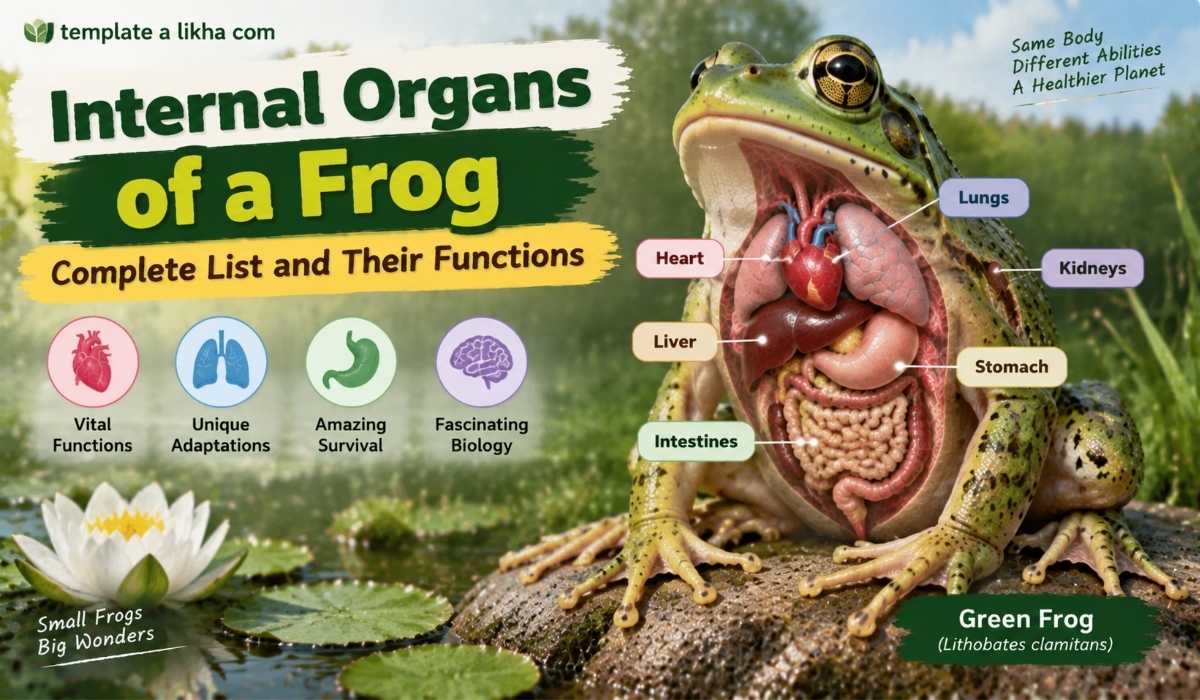
A frog may look like a simple animal from the outside, but its internal body structure is highly organized and adapted for survival in both water and on land. The internal organs of a frog work together to perform essential functions such as breathing, digestion, blood circulation, waste removal, movement, and coordination. Understanding frog internal anatomy helps explain how these amphibians survive in different environments. The major organs found inside a frog include the heart, lungs, liver, stomach, intestines, kidneys, and brain. Each organ has a specific role that supports the frog’s daily activities and survival.
Heart; The frog heart is responsible for circulating blood throughout the body. Unlike humans, frogs have a three-chambered heart consisting of two atria and one ventricle. The right atrium receives oxygen-poor blood from the body, while the left atrium receives oxygen-rich blood from the lungs and skin. The ventricle then pumps blood to different parts of the body. Although a frog’s heart is less complex than a mammal’s four-chambered heart, it is well suited for an amphibian lifestyle. It helps deliver oxygen and nutrients while removing carbon dioxide and other waste products.
Lungs; The lungs are the main organs responsible for breathing when frogs are on land. Frog lungs are simple, thin-walled sacs that allow oxygen and carbon dioxide exchange. Unlike humans, frogs do not have a diaphragm to pull air into their lungs. Instead, frogs use movements of their mouth and throat to push air into the lungs. In addition to lungs, frogs can also breathe through their moist skin, especially when they are underwater or inactive. This ability is called cutaneous respiration and is an important adaptation for amphibious life.
Liver; The liver is one of the largest internal organs in a frog’s body. It performs several important functions, including producing bile that helps digest fats, storing energy, processing nutrients, and removing harmful substances from the blood. The frog liver is divided into multiple lobes and plays a major role in metabolism. It helps maintain the chemical balance of the body and supports normal growth and energy use.
Stomach; The stomach is an important part of the frog’s digestive system. Frogs are mostly carnivorous and usually eat insects, worms, small fish, and other small animals. After swallowing prey, the stomach releases digestive acids and enzymes that break down food into smaller substances. These nutrients are then absorbed by the digestive system and used for energy, growth, and body repair. The stomach allows frogs to efficiently process their protein-rich diet.
Intestines; The intestines complete the digestion and absorption process in frogs. The small intestine absorbs nutrients from partially digested food and transfers them into the bloodstream. The large intestine absorbs water and prepares undigested waste for removal. Because frogs mainly consume animal-based food, their digestive tract is relatively short compared with herbivorous animals. This structure allows them to process their diet efficiently.
Kidneys; The kidneys are responsible for filtering waste products from the blood and maintaining water balance inside the frog’s body. They remove nitrogenous waste and help regulate the amount of water and salts in the body. Frogs depend on efficient kidney function because they often move between aquatic and terrestrial environments where water availability can change. The kidneys produce urine, which is transported through tubes called ureters before leaving the body.
Brain; The frog brain controls important body functions, including movement, senses, feeding behavior, and survival responses. It is divided into different regions that manage vision, hearing, coordination, and body control. The frog’s brain is especially adapted for quick reactions. For example, it helps frogs detect moving insects, escape predators, and coordinate powerful jumps and swimming movements.
Other Important Internal Structures; Besides these major organs, frogs also have other essential internal structures, including the pancreas, gallbladder, reproductive organs, spinal cord, and urinary bladder. These organs support digestion, reproduction, nervous control, and waste removal. Overall, the internal organs of a frog show how these amphibians are perfectly adapted for survival. The heart, lungs, liver, digestive organs, kidneys, and brain work together to maintain life and allow frogs to successfully live in a variety of habitats. Understanding what organs frogs have provides a deeper look into the fascinating biology of these unique amphibians.
Frog Heart: How Many Chambers Does a Frog Heart Have?
The frog heart is an essential internal organ that helps circulate blood throughout the body. Like humans and other vertebrates, frogs have a heart that pumps blood to deliver oxygen and nutrients to different organs while removing carbon dioxide and other waste products. Although a frog’s heart is simpler than a human heart, it is perfectly adapted to support an amphibious lifestyle. A frog has a three-chambered heart consisting of two atria and one ventricle. The right atrium receives oxygen-poor blood from the body, while the left atrium receives oxygen-rich blood from the lungs and skin. Both atria then send blood into the single ventricle, which pumps blood throughout the body. The frog’s blood circulation system includes both pulmonary circulation and systemic circulation. Pulmonary circulation carries blood between the heart and lungs for oxygen exchange, while systemic circulation transports oxygen and nutrients from the heart to the rest of the body. Frogs also absorb oxygen through their moist skin, which helps support their respiratory and circulatory systems.
The frog heart is different from the human heart, which has four chambers: two atria and two ventricles. The four-chambered human heart completely separates oxygen-rich and oxygen-poor blood, making circulation more efficient. In frogs, the single ventricle allows some mixing of oxygenated and deoxygenated blood, but this system is sufficient because frogs have a slower metabolism and lower energy requirements. Overall, the three-chambered frog heart is a remarkable adaptation that allows frogs to survive effectively both in water and on land. Understanding the structure and function of the frog heart provides important insight into frog internal anatomy and amphibian biology.
Frog Respiratory System: How Do Frogs Breathe?
The frog respiratory system is specially adapted for life both on land and in water. Unlike humans, frogs do not depend only on lungs for breathing. They use multiple methods to obtain oxygen, including their lungs, moist skin, and the lining of their mouth. This flexible breathing system allows frogs to survive in different environments and remain active in both aquatic and terrestrial habitats. Unlike humans, frogs use multiple methods of breathing. They can exchange gases through their lungs, mouth lining, and moist skin. This adaptation allows them to survive in both water and on land. Learn more about this fascinating process in How Do Frogs Breathe Underwater? The Science Behind Frog Respiration.
Lungs; The frog lungs are the main organs used for breathing when frogs are on land. Their lungs are simple, thin-walled sacs that allow oxygen from the air to enter the bloodstream and carbon dioxide to leave the body. However, frog lungs are less complex than human lungs because frogs have a lower energy requirement. Unlike humans, frogs do not have a diaphragm to pull air into their lungs. Instead, they use a process called buccal pumping. The frog lowers the floor of its mouth, drawing air into the mouth cavity through the nostrils. Then, by closing the nostrils and raising the mouth floor, the frog pushes air into the lungs.
Skin Respiration; One of the most unique features of frog breathing is cutaneous respiration, which means breathing through the skin. A frog’s skin is thin, moist, and filled with tiny blood vessels that allow oxygen to pass directly into the bloodstream. Skin respiration is especially important when frogs are underwater, resting, or hiding from predators. The mucus layer on their skin helps keep it moist, allowing efficient gas exchange. If a frog’s skin becomes dry, its ability to absorb oxygen decreases significantly.
Breathing Underwater; Many people ask, can frogs breathe underwater? The answer is yes, but it depends on the species and situation. Frogs cannot usually breathe underwater using their lungs because lungs are designed for air. Instead, they absorb dissolved oxygen from water through their skin. Aquatic frogs can remain underwater for long periods because their skin respiration allows them to continue receiving oxygen. However, frogs may need to return to the surface when they require more oxygen, especially during active movement.
Mouth Pumping; Frogs use their mouth and throat movements to control airflow into their lungs. This mouth pumping mechanism replaces the role of the diaphragm found in mammals. By repeatedly moving the floor of the mouth, frogs can push air into their lungs efficiently. Overall, the frog respiratory system is a remarkable adaptation that allows frogs to breathe in different environments. The combination of lungs, skin respiration, and mouth pumping helps frogs survive successfully on land, in ponds, and in other wet habitats. Unlike humans, frogs use multiple methods of breathing. They can exchange gases through their lungs,
Frog Digestive System: How Do Frogs Eat and Digest Food?
The frog digestive system is specially adapted for processing the food that frogs consume. Most frogs are carnivorous and feed on insects, worms, spiders, small fish, and other small animals. Unlike humans, frogs do not chew their food. Instead, they capture prey using their sticky tongue and swallow it whole.
Swallowing Prey Whole; Frogs usually catch prey by quickly extending their sticky tongue and pulling the food into their mouth. Since frogs do not have teeth designed for chewing, they cannot break food into smaller pieces. Their teeth are mainly used for gripping and holding prey rather than cutting or chewing. Frogs often use their eyes to help push food down their throat by pressing them inward.
Stomach; The frog stomach is an important organ where digestion begins. After swallowing prey, the food enters the stomach, where digestive acids and enzymes break it down into smaller substances. These nutrients are prepared for absorption and provide energy needed for movement, growth, and survival.
Intestine; The intestines are responsible for absorbing nutrients and water from digested food. The small intestine absorbs useful nutrients and transfers them into the bloodstream, while the large intestine absorbs water and collects undigested waste. Because frogs mainly eat animal-based food, their digestive tract is relatively short compared with plant-eating animals.
Cloaca; The cloaca is a special chamber that plays an important role in a frog’s digestive, urinary, and reproductive systems. Undigested food waste, urine, and reproductive materials all pass through the cloaca before leaving the body. This shared opening is a common feature among amphibians. Overall, the frog digestive system allows frogs to efficiently process their food without chewing. Their specialized tongue, stomach, intestines, and cloaca work together to help them obtain energy and survive in different environments. Frogs have a specialized digestive system designed to process insects and other small prey. Their stomach, intestines, liver, and other organs work together to break down food efficiently. Learn more about these organs and their functions in Internal Organs of a Frog: Names, Functions, and Importance.
Frog Brain and Nervous System: How Smart Are Frogs?
The frog brain and nervous system control movement, senses, feeding behavior, and survival responses. Although a frog’s brain is much smaller and simpler compared with mammals, it is highly adapted for the needs of an amphibious lifestyle. Frogs can detect prey, escape predators, and respond quickly to changes in their environment.
Frog Brain; The frog brain is divided into different regions, including the forebrain, midbrain, and hindbrain. Each area controls specific functions such as smell, vision, movement, balance, and coordination. The brain receives information from sensory organs and helps frogs make rapid decisions for survival.
Reflex Response; Frogs are known for their fast reflexes. When a predator approaches, a frog can quickly detect danger and jump away before the threat reaches it. These rapid responses are controlled by the nervous system and spinal cord, allowing frogs to react quickly without complex decision-making.
Hunting Movement; A frog’s nervous system plays an important role in hunting. The eyes detect moving prey, the brain processes the information, and the muscles coordinate the tongue movement needed to capture insects. This precise connection between the senses, brain, and muscles allows frogs to catch prey effectively.
Sensory Organs; Frogs depend on several sensory organs, including their eyes, ears, skin, and nostrils. Their large eyes help detect movement, their tympanum (eardrum) allows them to hear sounds, and their sensitive skin helps detect changes in the environment. Although frogs are not considered highly intelligent animals like mammals, they are well adapted to their surroundings. Their brain and nervous system allow them to perform essential behaviors such as hunting, avoiding predators, finding mates, and surviving in complex habitats.
Unique Frog Body Parts People Are Curious About

Frogs have several unique body parts that make them fascinating animals and help them survive in different environments. Some features, such as their sticky tongue, bulging eyes, slimy skin, webbed feet, and powerful hind legs, are specially adapted for hunting, movement, and protection. Other structures, including the tympanum (eardrum), nictitating membrane, and poison glands, provide frogs with special abilities that many people find interesting. These unusual adaptations allow frogs to see in different conditions, breathe through their skin, escape predators, and live successfully in both water and on land. Understanding these unique body parts reveals the amazing biology of frogs.
Do Frogs Have Teeth? Frog Mouth Anatomy Explained
Many people are surprised to learn that frogs can have teeth, but their teeth are very different from human teeth. Most frogs have small, cone-shaped teeth located along the edges of their upper jaw. These teeth are mainly used for holding prey rather than chewing food.
Frog Teeth; Frog teeth are tiny and not designed for breaking or grinding food. Since frogs usually swallow their prey whole, they do not need powerful chewing teeth like humans. Their teeth help prevent insects and small animals from escaping after being captured.
Maxillary Teeth; The most common type of frog teeth are called maxillary teeth. These teeth are found along the upper jaw and help frogs grip slippery prey. Some frogs also have vomerine teeth, which are located on the roof of the mouth and provide additional support for holding food. Unlike humans, frogs do not use their teeth to chew. Their teeth are small, weak, and mainly serve as gripping tools. Many frog species have no teeth at all, while others have only a limited number of tiny teeth.
Difference From Humans; Human teeth are strong structures designed for biting, tearing, and grinding different types of food. Frogs, on the other hand, depend more on their sticky tongue and quick movements to capture prey. After catching food, they swallow it whole and allow their digestive system to break it down. Frogs usually do not bite humans because their teeth are too small to cause serious harm. Their mouth structure is mainly adapted for hunting small prey, not defense. Understanding frog mouth anatomy shows how these amphibians have evolved unique feeding strategies suited to their lifestyle.
Do Frogs Have Ears? How Do Frogs Hear?
Although frogs do not have visible external ears like humans, they can hear very well. Instead of outer ears, frogs have a special hearing structure called the tympanum, which allows them to detect sounds and communicate with other frogs.
Tympanum; The tympanum is a round, flat membrane located behind each frog’s eye. It works similarly to the human eardrum by vibrating when sound waves reach it. These vibrations are transferred to the inner ear, where they are converted into signals that the brain can understand. The size and appearance of the tympanum vary among frog species. In some frogs, it is clearly visible as a circular patch, while in others it may be less noticeable.
Hearing System; A frog’s hearing system is specially adapted for detecting sounds in its environment. Frogs can hear sounds from predators, moving animals, and other frogs. Their inner ear helps them identify the direction and distance of sounds, allowing them to respond quickly. Hearing is especially important during the breeding season because frogs rely on sound communication to find mates. Male frogs produce species-specific calls that attract females and warn other males to stay away.
Frog Calls; Frog calls are one of the most recognizable sounds in wetlands and forests. Each species has a unique call pattern, which helps frogs identify members of their own species. Some frogs produce loud calls that can travel long distances, especially at night. Although frogs lack visible ears, their advanced hearing system allows them to communicate, avoid danger, and survive effectively in their habitats.
Frog Cloaca: What Is This Unique Body Part?
The frog cloaca is a unique body part that plays an important role in the digestive, urinary, and reproductive systems. Unlike humans, frogs do not have separate openings for waste removal, urine release, and reproduction. Instead, these functions share a common chamber called the cloaca.
Waste Removal; The cloaca receives undigested food waste from the intestine. When waste reaches this chamber, it is stored temporarily before being released from the body. This system helps frogs efficiently remove solid waste.
Urinary System; The frog’s kidneys filter waste products from the blood and produce urine. The urine travels through tubes called ureters and enters the cloaca before leaving the body. The cloaca therefore acts as a final passage for urinary waste.
Reproduction; The cloaca also plays an important role in frog reproduction. During mating, reproductive cells pass through the cloaca. Female frogs release eggs through this opening, while males release sperm during fertilization.
Do Frogs Have Separate Openings? : No, frogs do not have separate openings for digestion, urination, and reproduction. Instead, they have one common opening called the cloaca. This is a common feature among amphibians, reptiles, birds, and some fish. The frog cloaca is a simple but highly efficient adaptation that supports multiple body functions. Although it may seem unusual compared with humans, this structure helps frogs survive successfully in aquatic and terrestrial environments.
Frog Anatomy Comparison (Traffic Booster)

Comparing frog anatomy with other animals helps us understand how frogs are specially adapted for survival. Although frogs share many basic body structures with humans and other vertebrates, their organs and body parts have unique differences. Features such as a three-chambered heart, skin breathing, powerful hind legs, and specialized eyes make frogs different from mammals. These comparisons reveal how frogs have evolved to live both in water and on land. Understanding the similarities and differences between frog anatomy and human anatomy provides valuable insight into amphibian biology and explains why frogs are such successful and fascinating animals. To see a detailed visual comparison, explore our Frog Anatomy Diagram: A Complete Labeled External and Internal Guide.
Frog Body Parts vs Human Body Parts: Key Differences
Frogs and humans are both vertebrates, meaning they have a backbone and many similar internal organs, including a heart, lungs, brain, digestive system, and kidneys. However, their body parts are adapted for completely different lifestyles. Humans are mammals that mainly live on land, while frogs are amphibians that can survive in both aquatic and terrestrial environments. The differences between frog anatomy and human anatomy can be clearly seen in their heart, skin, breathing system, and movement.
Heart Difference; The frog heart and human heart have different structures based on their energy requirements. Frogs have a three-chambered heart consisting of two atria and one ventricle. The single ventricle allows some mixing of oxygen-rich and oxygen-poor blood. This circulation system is suitable for frogs because they have a slower metabolism and require less energy. Humans have a four-chambered heart consisting of two atria and two ventricles. This structure completely separates oxygenated and deoxygenated blood, making circulation more efficient. The human heart can deliver more oxygen to muscles and organs, supporting a higher metabolic rate and continuous body activity.
Skin Difference; Frog skin and human skin are very different in structure and function. Human skin is thick, dry, and designed mainly for protection. It prevents water loss, protects against injuries, and acts as a barrier against harmful microorganisms. Frog skin is thin, smooth, and usually covered with a mucus layer. This moist skin helps frogs survive because they can absorb oxygen directly through their skin through a process called cutaneous respiration. However, their skin also causes water loss, which is why frogs need moist environments to stay alive.
Breathing Difference; Humans mainly depend on their lungs for breathing. Air enters through the nose or mouth, travels to the lungs, and oxygen is transferred into the bloodstream. The diaphragm plays an important role by helping the lungs expand and contract during breathing. Frogs use a more flexible respiratory system. They breathe through their lungs when they are on land, but they can also absorb oxygen through their moist skin and mouth lining. Frogs do not have a diaphragm; instead, they use movements of the mouth and throat to push air into their lungs. This adaptation allows them to survive underwater for periods of time.
Movement Difference; Frog movement is very different from human movement because their bodies are designed for different environments. Humans have long, weight-bearing legs adapted for walking, running, and maintaining an upright posture. Frogs have powerful hind legs that are specialized for jumping and swimming. Their large leg muscles store and release energy, allowing them to jump several times their body length. Many frogs also have webbed feet for swimming, while tree frogs have sticky toe pads for climbing surfaces. Overall, frog anatomy and human anatomy show how body structures evolve according to lifestyle and environment. Although frogs and humans share many organs, their differences in the heart, skin, breathing system, and movement reveal how each species has developed unique adaptations for survival. Understanding frog anatomy vs human anatomy provides a deeper appreciation of how different animals are designed to live successfully in their own habitats.
Frog Anatomy Diagram Section

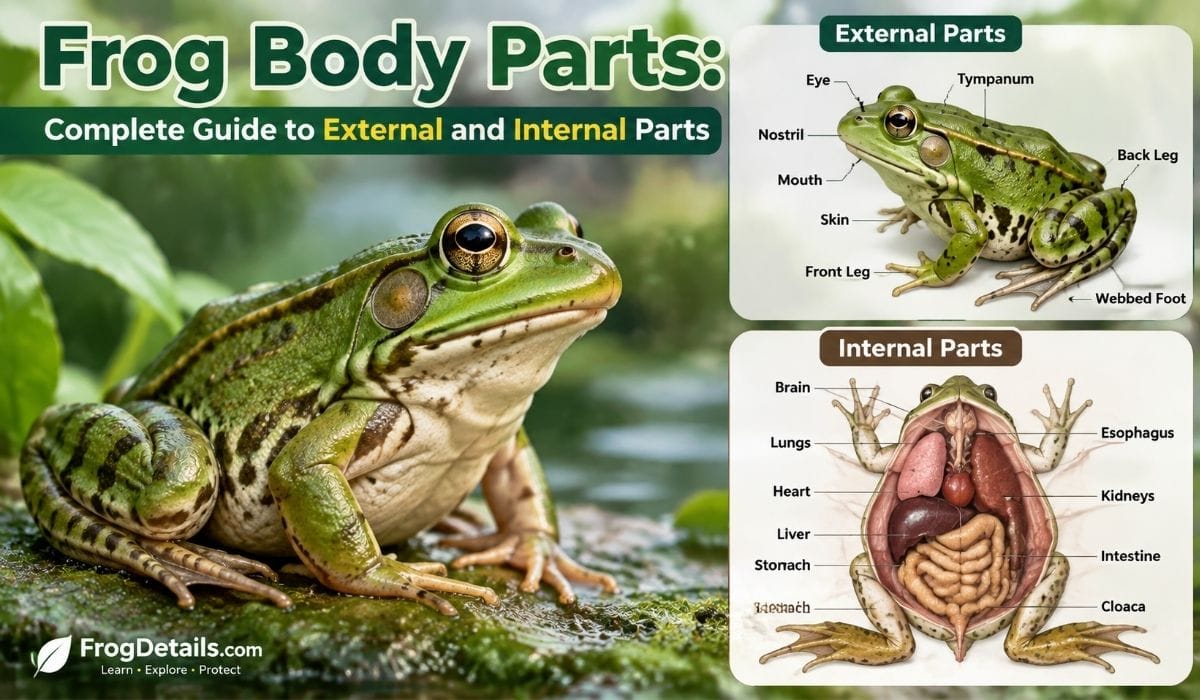
A frog anatomy diagram provides a clear visual understanding of both the external and internal body parts of a frog. By labeling important structures, readers can easily identify organs and understand their functions. A detailed frog anatomy diagram usually shows external features such as the eyes, nostrils, mouth, skin, legs, feet, and toes, along with internal organs including the heart, lungs, liver, stomach, intestines, kidneys, and brain. These visual guides are especially helpful for students, researchers, and anyone interested in amphibian biology. Exploring a labeled frog anatomy diagram makes it easier to understand how different body parts work together to help frogs survive in water and on land. For a detailed explanation of frog organs and body systems, read Internal Anatomy of a Frog: Complete Organs and Body Systems Explained.
Frog Anatomy Diagram: Complete Labeled External and Internal Parts
A frog anatomy diagram provides a clear visual representation of the different body parts that help frogs survive in aquatic and terrestrial environments. A complete labeled frog anatomy diagram usually includes both external body parts and internal organs, making it easier to understand the structure and function of a frog’s body.
External Frog Body Parts; The external anatomy of a frog includes several important structures that help with movement, sensing, feeding, and protection.
Eye; Frog eyes are large and positioned on the top of the head, giving them a wide field of vision. Their eyes help detect moving prey, avoid predators, and see in low-light conditions.
Tympanum; The tympanum is the frog’s external hearing structure located behind the eyes. It works like an eardrum and helps frogs detect sounds, communicate through calls, and identify danger.
Mouth; The frog mouth is adapted for capturing and swallowing prey. Frogs use their sticky tongue to catch insects and usually swallow food whole instead of chewing.
Skin; Frog skin is thin, moist, and covered with mucus. It helps prevent water loss and allows frogs to absorb oxygen through their skin through a process called cutaneous respiration.
Legs; Frog legs are specially adapted for movement. Their powerful hind legs allow them to jump long distances, escape predators, and move efficiently through water.
Feet; Frog feet help with swimming, climbing, and landing after jumps. Many aquatic frogs have webbed feet, while tree frogs have sticky toe pads for climbing.
Internal Frog Body Parts; A labeled frog anatomy diagram also shows important internal organs that control essential life processes.
Brain; The frog brain controls movement, senses, feeding behavior, and quick responses. It helps frogs coordinate hunting, jumping, and avoiding predators.
Heart; The frog heart pumps blood throughout the body. Frogs have a three-chambered heart that circulates oxygen and nutrients to different organs.
Lungs; Frog lungs help with breathing on land by exchanging oxygen and carbon dioxide. Frogs can also breathe through their moist skin when underwater.
Liver; The liver is one of the largest internal organs in frogs. It helps with digestion, nutrient storage, and removing harmful substances from the body.
Stomach; The stomach breaks down swallowed prey using digestive acids and enzymes. Since frogs do not chew food, the stomach plays an important role in digestion.
Intestine; The intestines absorb nutrients and water from digested food. They complete the digestive process and prepare waste for removal from the body. Understanding a complete labeled frog anatomy diagram helps students and nature enthusiasts recognize how each body part works together. These external and internal adaptations allow frogs to successfully survive in a wide range of environments.
Frequently Asked Questions About Frog Body Parts

Why do frogs have big eyes?
Frogs have big, round eyes because their vision is essential for survival. Large eyes give frogs a wider field of view, helping them detect predators and locate prey quickly. Many frogs are active at night, so their large eyes also help them see better in low-light conditions. A frog’s eyes are positioned on the top and sides of its head, allowing it to see above the water surface while keeping most of its body hidden. This is especially useful when frogs are waiting for insects or avoiding predators. Frogs also have a special protective layer called the nictitating membrane, a transparent third eyelid that protects their eyes and helps them see underwater.
Why are frogs slimy?
Frogs are slimy because their skin produces mucus, which is an important adaptation for survival. Unlike humans, frogs do not have scales or fur to protect their bodies. Their moist skin helps prevent dehydration and allows them to exchange gases through their skin. The mucus layer keeps the skin wet, allowing frogs to absorb oxygen from the environment. It also protects them from harmful bacteria, fungi, and parasites. Some frog species produce toxic substances through their skin glands as a defense mechanism against predators. The slimy coating is therefore not just a sign of moisture—it is a vital part of a frog’s protection and breathing system.
Can frogs breathe through their skin?
Yes, frogs can breathe through their skin. This process is called cutaneous respiration. Tiny blood vessels beneath the skin allow oxygen from the surrounding environment to enter the bloodstream and carbon dioxide to leave the body. Skin breathing is especially important when frogs are underwater or resting. However, their skin must remain moist for this process to work effectively. Frogs also use their lungs and the lining of their mouth for breathing. Using multiple methods of respiration allows them to survive in both aquatic and terrestrial environments.
Can frogs breathe underwater?
Yes, many frogs can breathe underwater, but not in the same way fish do. Instead of using gills, frogs absorb oxygen through their moist skin while submerged. Some frogs can remain underwater for long periods because their skin is highly efficient at absorbing oxygen. However, they usually need oxygen-rich water, and the ability varies between species. Adult frogs normally use lungs when they are on land, while their skin becomes more important during underwater periods. This unique breathing ability helps frogs survive in ponds, streams, and wetlands.
Why do frogs have long legs?
Frogs have long, powerful hind legs because they are specially adapted for jumping. Their strong leg muscles allow them to escape predators, catch prey, and move quickly between different habitats. The bones and muscles in frog legs work together like a natural spring. Before jumping, frogs store energy in their muscles and release it quickly, producing powerful movements. Long hind legs are also useful for swimming. Frogs use their legs to push against water, helping them move efficiently through ponds and lakes.
Why do frogs have long tongues?
Frogs have long, sticky tongues that help them catch insects quickly. Unlike humans, frogs do not chase most prey. Instead, they wait patiently and use their tongue as a rapid hunting tool. A frog’s tongue is attached near the front of its mouth, allowing it to extend outward and capture insects within fractions of a second. The sticky surface helps trap prey and pull it back into the mouth. This adaptation allows frogs to catch flies, mosquitoes, and other small animals without spending much energy.
How do frogs catch insects?
Frogs catch insects mainly by using their powerful eyes, quick movements, and sticky tongues. They usually remain still and wait for prey to come close before striking. When an insect moves within range, the frog quickly extends its tongue, captures the insect, and pulls it back into its mouth. Some frogs can catch prey in less than a second. Frogs also use camouflage to stay hidden from insects and predators. Their ability to sit quietly for long periods makes them effective hunters.
Do frogs have teeth?
Yes, some frogs have small teeth, but they are very different from human teeth. Frog teeth are mainly used to hold prey rather than chew food. Most frogs have tiny teeth along the upper jaw, called maxillary teeth. Some species also have additional teeth on the roof of the mouth. Frogs usually swallow their prey whole because their teeth cannot break food into smaller pieces. Many frogs eat insects, worms, and small animals that can be swallowed easily.
Do frogs have ears?
Yes, frogs have ears, but they do not have external ear structures like humans. Instead, they have a visible circular structure behind each eye called the tympanum, which works like an eardrum. The tympanum detects sound vibrations and helps frogs hear calls from other frogs, especially during mating seasons. Male frogs often produce loud calls to attract females and communicate. Frogs can also detect vibrations through their bodies, helping them sense movements around them.
What organs are inside a frog?
A frog has many internal organs that help it survive, including the heart, lungs, liver, stomach, intestines, kidneys, brain, and reproductive organs. The heart pumps blood throughout the body, while the lungs and skin help with breathing. The liver supports digestion and removes toxins, while the stomach and intestines process food. Frogs also have kidneys that remove waste from the blood and a brain that controls movement, senses, and behavior. Although frog organs are similar to many vertebrates, they have unique adaptations for amphibian life.
How many chambers does a frog heart have?
A frog heart has three chambers: two atria and one ventricle. The right atrium receives oxygen-poor blood from the body, while the left atrium receives oxygen-rich blood from the lungs and skin. Both types of blood enter the single ventricle, where some mixing occurs before blood is pumped throughout the body. Although a frog’s heart is less complex than a human heart, which has four chambers, it is well adapted for an amphibian lifestyle.
Do frogs have lungs?
Yes, adult frogs have lungs, but they do not depend only on them for breathing. Frog lungs are relatively simple compared with human lungs. Frogs use lungs when they are active on land, but they also breathe through their skin and the lining of their mouth. This combination allows them to survive in different environments. Tadpoles usually have gills when they live in water, but as they develop into adult frogs, they lose their gills and develop lungs.
Final Thoughts: Understanding the Amazing Body Parts of a Frog

A frog’s body is a perfect example of how animals adapt to survive in different environments. From its large eyes and sticky tongue to its powerful legs and moisture-sensitive skin, every body part has a specific purpose. These unique features help frogs hunt efficiently, escape predators, breathe in different conditions, and survive both on land and in water. The internal organs of a frog are also specially adapted for amphibian life. Its three-chambered heart, lungs, digestive system, and skin respiration system work together to support its daily activities. Although frogs may appear simple from the outside, their anatomy reveals a highly organized and fascinating biological design. Learning about frog body parts helps us understand not only frogs but also the amazing process of evolution. Each feature tells a story about adaptation, survival, and the relationship between animals and their environment. Frogs are small creatures, but their body structure shows the incredible complexity of nature. A frog’s transformation throughout life also shows how its body changes and adapts. Learn more about these stages in Frog Life Cycle: From Egg to Adult Frog Explained.
Related Frog Guides
- Frog Anatomy: Complete Guide to Frog Structure and Functions
- Internal Anatomy of a Frog: Complete Organs and Body Systems Explained
- Frog Anatomy Diagram: A Complete Labeled External and Internal Guide
- Internal Organs of a Frog: Names, Functions, and Importance
- How Do Frogs Breathe Underwater? The Science Behind Frog Respiration
- Do Frogs Have Ears? How Frogs Hear Without External Ear
- Frog Life Cycle: From Egg to Adult Frog Explained