
Approximate Number of Frog Species in Rainforest

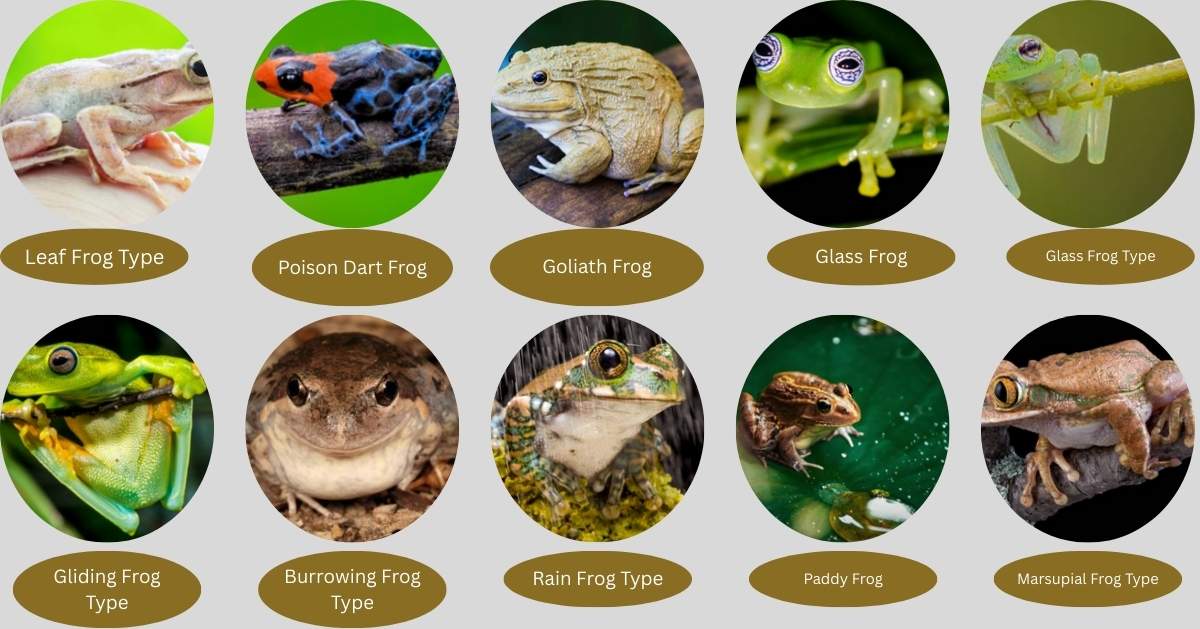
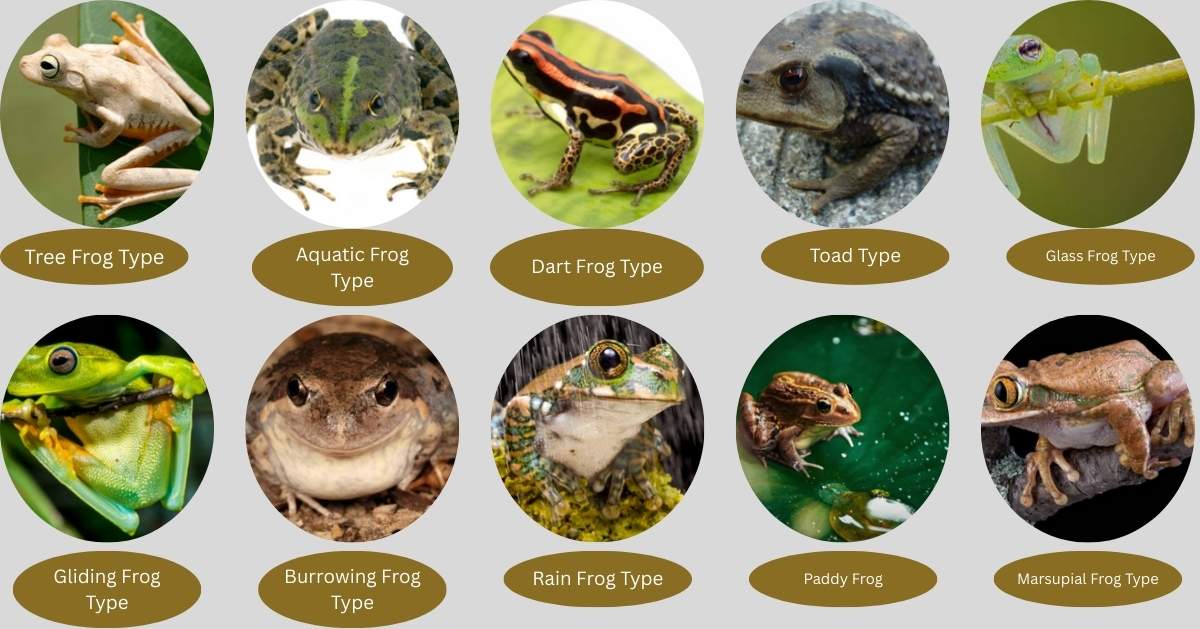
Rainforests are home to an incredibly rich variety of frog species, making them one of the most important ecosystems for amphibian life on Earth. Scientists estimate that more than 3,000 frog species live in tropical rainforests alone. This means over half of the world’s total frog species, which is around 7,000+, can be found in these dense, humid forests. The warm temperatures, continuous rainfall, and high humidity create the perfect environment for frogs to survive, reproduce, and evolve into many unique types.
Different rainforest regions host different species. The Amazon Rainforest contains the highest diversity, with over 1,000 frog species, including poison dart frogs and glass frogs. Central American rainforests, African rainforests like the Congo Basin, and Southeast Asian rainforests also support hundreds of species. Many rainforest frogs have bright colors, climbing abilities, and special adaptations that help them live in trees, on the forest floor, or near water streams.
Unfortunately, many of these frog species are now threatened due to habitat loss, climate change, and pollution. Protecting rainforest habitats is crucial to preserve this huge diversity of frogs. Without these forests, thousands of frog species could disappear forever.
🌧️ Why So Many Frogs in Rainforests?
Rainforests are the perfect home for frogs because they provide everything frogs need to survive. These forests stay warm all year, which is important for frogs since they are cold-blooded and depend on the environment to control their body temperature. Rainforests also receive heavy rainfall, keeping the air and ground very moist. This high humidity helps frogs keep their skin wet, which is necessary for breathing and staying healthy.

Another big reason is food. Rainforests are full of insects like flies, ants, beetles, and mosquitoes, giving frogs an endless supply of food. The dense trees, plants, and water sources also create many safe places for frogs to hide, climb, and lay eggs. From tree branches to ponds and leaf litter, frogs can live almost anywhere in a rainforest.
Because all these conditions are ideal, rainforests support thousands of different frog species, more than any other habitat.
Poison Dart Frog – Bright and Toxic
🌍 Rainforest Regions & Frog Diversity
Different rainforest regions around the world support their own unique frog species, making these habitats the most diverse places for amphibians. The Amazon Rainforest in South America has the highest frog diversity, with over 1,000 species, including poison dart frogs, glass frogs, and tree frogs. Its warm climate, constant rainfall, and thick vegetation create perfect conditions for frogs to thrive.

In Central America, rainforests in Costa Rica and Panama host hundreds of colorful species such as the red-eyed tree frog and harlequin frogs. These areas are rich in rivers, canopy cover, and insects, providing ideal homes for many small frog types.
The Congo Basin in Africa also contains a large variety of frogs, including goliath frogs and reed frogs. Meanwhile, Southeast Asian rainforests, like those in Indonesia and Malaysia, are known for flying frogs and various tree frog species.
Together, these rainforest regions create hotspots of frog diversity found nowhere else on Earth.
Why Are Rainforests Home to So Many Frogs?
Frogs need moisture, warmth, and abundant food to survive. Rainforests offer all these conditions, making them the perfect habitat for thousands of species.
Major Rainforest Regions for Frog Diversity
The Amazon Rainforest has the highest frog diversity, followed by Central American rainforests, Africa’s Congo Basin, and Southeast Asian rainforests.
1. Poison Dart Frog

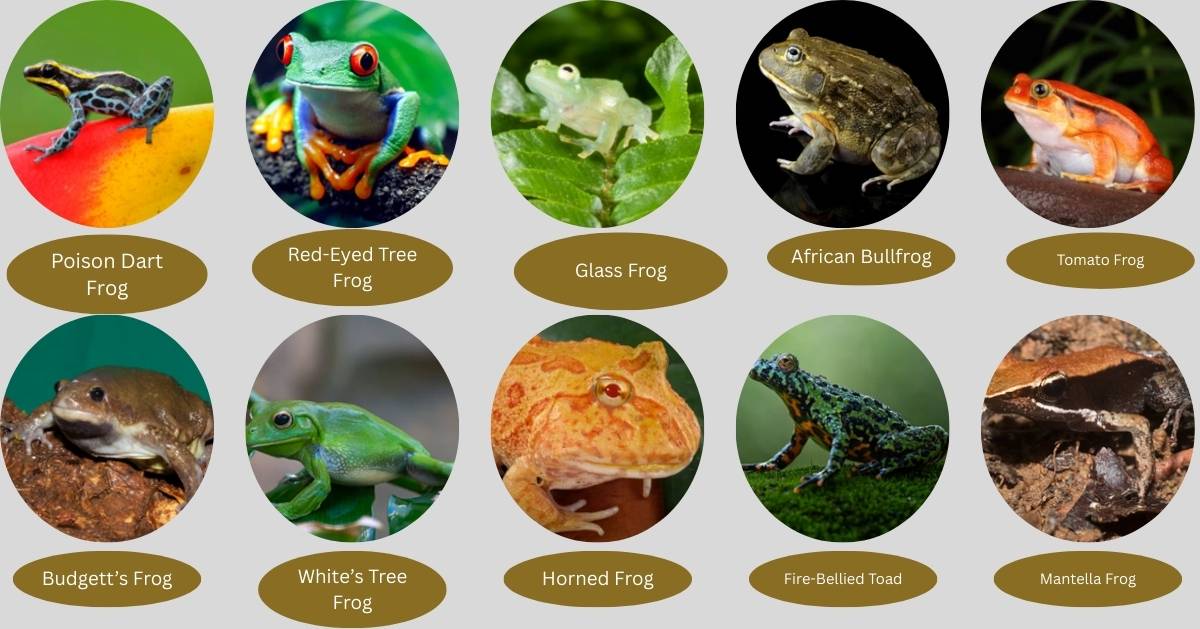
The Poison Dart Frog is one of the most iconic amphibians found in tropical rainforests. Known for its brilliant colors and powerful toxins, this tiny frog has become a symbol of both beauty and danger in nature. Native to the rainforests of Central and South America, these frogs thrive in warm, humid environments where insects are abundant. Although most species are only 1–2 inches long, they play a huge role in maintaining rainforest balance. They help control insect populations, support food chains, and show scientists how healthy or unhealthy a rainforest ecosystem is. Their presence often indicates a clean, unpolluted environment, making them an important biological indicator species.
Identification
- Bright colors: blue, yellow, orange, green, red
- Small size: 1–2 inches
- Very smooth and shiny skin
- Highly toxic skin chemicals
- Lives near leaf litter, plants, and wet forest floors
- Feeds on ants, termites, beetles, and tiny insects
- Quick movement and agile jumping abilities
Habitat
Poison Dart Frogs live in the dense rainforests of Costa Rica, Brazil, Colombia, Ecuador, and Peru. They stay close to moist areas such as riverbanks, moss-covered logs, and shaded forest floors. Constant rain and humidity help them keep their skin wet, allowing them to breathe properly. These frogs rarely move far from water because moisture is essential for their survival and reproduction.
Behavior
These frogs are active during the day, which is rare for many amphibians. Their bright colors work as a warning to predators—an adaptation called aposematism. Some species are territorial and will defend their small area from other frogs. Poison Dart Frogs also show unique parental care. After eggs hatch, one parent often carries the tiny tadpoles on their back to small water pools in leaves, tree holes, or bromeliad plants
Diet
Their diet includes ants, mites, spiders, and small forest insects. The toxins in their skin originate from the chemicals found in these insects. Frogs raised in captivity without their natural insect diet lose their toxicity, proving the link between food and poison production.
Reproduction
Females lay small clusters of eggs on leaves or moist soil. Once hatched, a parent transports the tadpoles to water-filled leaf cups or tiny pools high in trees. Some species even feed their tadpoles unfertilized eggs.
Conservation Status
Many Poison Dart Frog species are threatened due to deforestation, climate change, and illegal pet trade. Protecting rainforest habitats is crucial for their survival.
2. Red-Eyed Tree Frog

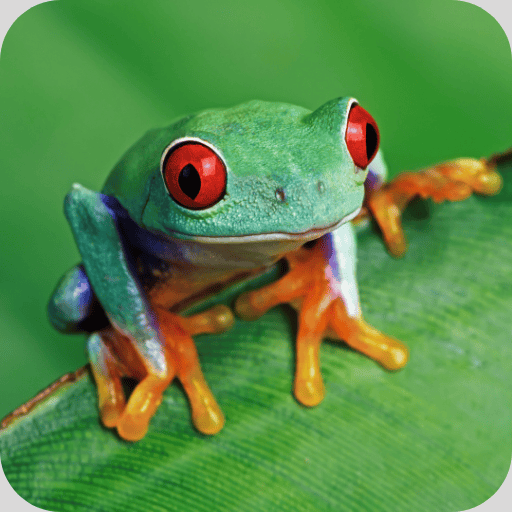
The Red-Eyed Tree Frog is one of the most recognizable and photogenic frogs in the rainforest. Its bright green body, orange toes, and striking red eyes make it a favorite among wildlife photographers and nature lovers. Found mainly in the rainforests of Central America, this frog relies more on camouflage than poison for survival. During the day, it sleeps by tucking its bright colors away, blending perfectly with leaves. At night, it becomes active, hunting insects and climbing through the forest canopy. This species plays an important role in maintaining the balance of rainforest ecosystems by controlling insect populations and serving as prey for birds and snakes.
Identification
- Bright green body with blue or yellow stripes on sides
- Large red eyes
- Orange or yellow toes
- Smooth skin
- Usually around 2–3 inches long
- Excellent climber with sticky toe pads
- Mostly nocturnal
Habitat
Red-Eyed Tree Frogs live in the tropical rainforests of Costa Rica, Panama, Nicaragua, and Honduras. They prefer humid, lowland forests with plenty of vegetation and nearby water. Because they are arboreal, they spend most of their lives high in the trees, hiding under leaves during the day and exploring the canopy at night. Rainforest humidity helps keep their skin moist, which is essential for their survival.
Behavior
These frogs are famous for their sudden “startle display.” When a predator comes close, the frog quickly opens its bright red eyes and flashes its colorful sides, surprising the attacker long enough to escape. They are excellent jumpers and climbers, using their sticky toes to hold onto leaves and branches. Red-Eyed Tree Frogs are not poisonous; instead, they rely on camouflage, agility, and surprise to protect themselves.
Diet
Their diet includes crickets, flies, moths, and other small insects found in the rainforest canopy. At night, they actively hunt by moving from leaf to leaf, catching insects with their quick tongue.
Reproduction
Breeding usually occurs during the rainy season. Females lay eggs on leaves hanging over water. When the eggs hatch, the tadpoles fall directly into the water below, where they begin their development.
Conservation Status
Although still common, Red-Eyed Tree Frog populations are threatened by habitat loss, climate change, and pollution. Protecting rainforest environments is essential for their long-term survival.
3. Glass Frog

the Glass Frog is one of the most unique and fascinating frogs found in the world’s tropical rainforests. It is named for its transparent belly, which reveals internal organs such as the heart, liver, and digestive system. This remarkable feature makes the Glass Frog a favorite among scientists and wildlife photographers. Found mostly in Central and South America, these frogs live in humid forests near streams where they breed and lay eggs. Their small size, green coloration, and leaf-like appearance make them excellent at hiding from predators. Despite their delicate appearance, Glass Frogs play an important ecological role by helping maintain insect populations and serving as prey for reptiles and birds.
Identification
- Light green or lime-colored body
- Transparent belly, showing internal organs
- Small size (1–3 inches)
- Smooth, delicate skin
- Large, forward-facing eyes
- Lives mostly on leaves and branches
- Active at night (nocturnal)
Habitat
Glass Frogs are found in the tropical rainforests of Costa Rica, Panama, Colombia, Ecuador, Peru, and parts of Venezuela. They prefer moist, dense forests located near clean, fast-flowing streams. Their survival heavily depends on water availability because they lay their eggs on leaves hanging above streams. The constant rainforest humidity helps them maintain their soft, thin skin and stay hydrated.
Behavior
These frogs are mainly nocturnal and become active after sunset. During the day, they stay still on the underside of leaves, blending perfectly with their surroundings. Their transparency also helps reduce shadows, making them harder for predators to see. Male Glass Frogs guard the eggs and protect them from insects and other predators—a rare behavior among frogs. They communicate using soft chirping sounds to defend territory or attract females.
Diet
Glass Frogs feed on small insects such as flies, ants, moths, spiders, and tiny invertebrates. Their lightweight body and long limbs help them move easily across leaves to hunt for food at night.
Reproduction
During breeding season, males call from leaves above streams to attract females. Females lay eggs on the upper surfaces of leaves. Once the eggs hatch, the tadpoles drop into the stream below, where they continue developing.
Conservation Status
Many Glass Frog species are now threatened due to habitat loss, pollution, and climate change. Their dependence on clean water makes them extremely sensitive to environmental damage
4. Red-Eyed Tree Frog

The Red-Eyed Tree Frog is one of the most recognizable and iconic rainforest frog species, admired for its dazzling colors and striking appearance. These frogs are native to the tropical rainforests of Central America, where they thrive in warm, humid environments and spend most of their lives in trees. Their bright red eyes, neon-green body, and blue-and-yellow striped sides make them look almost unreal—an excellent example of nature’s artistry. Although highly colorful, they are not poisonous; instead, they rely on camouflage and surprise to survive in the wild.
Identification
Vibrant green body with blue-and-yellow sides
Large bright red eyes
Orange or red feet
Smooth skin, slender body, and sticky climbing pads
& Distribution
Usually 2–3 inches long
Habitat
Red-Eyed Tree Frogs inhabit lowland tropical rainforests of:
- Costa Rica
- Honduras
- Nicaragua
- Panama
They prefer areas near rivers, streams, and moist vegetation where humidity stays high. These frogs spend nearly all their time in trees, only coming down during breeding season.
Diet & Feeding Behavior
These frogs are insectivores, feeding mainly on:
- Crickets
- Moths
- Flies
- Grasshoppers
- Other small invertebrates
Their excellent night vision helps them detect prey in total darkness. They ambush insects using their long sticky tongues.
Defense Mechanisms
Even though they are not poisonous, Red-Eyed Tree Frogs have a clever defense strategy known as startle coloration. When a predator approaches, the frog suddenly opens its eyes and exposes its bright colors. This flash of red shocks predators, giving the frog a second to escape.
Reproduction & Life Cycle
Red-Eyed Tree Frogs lay their eggs on leaves that hang over water. When the eggs hatch, tadpoles drop into the water below. Their entire life cycle depends on the rainforest’s moisture, making them sensitive to environmental change.
Why They Are Important
These frogs help maintain insect populations and act as indicators of ecosystem health. A decline in their numbers often signals problems such as habitat loss or pollution. Protecting them is essential for preserving rainforest biodiversity.
5. Amazon Milk Frog

The Amazon Milk Frog, also called the Mission Golden-Eyed Tree Frog, is a beautiful and fascinating rainforest species known for its milky secretion that acts as a natural defense. These frogs are medium-sized, semi-arboreal, and found deep within the Amazon Basin. Their unique gray-and-brown patterned skin, smooth body texture, and striking golden eyes make them easy to identify. As they age, their skin becomes rougher, giving them a distinctive appearance compared to other tree frogs. Calm, slow-moving, and visually stunning, the Amazon Milk Frog has become one of the most admired rainforest frogs in the world.
Identification
- Gray, white, and brown banded pattern on the body
- Golden or copper-colored eyes
- Skin becomes bumpy and rough with age
- Large toe pads for climbing
- Grows 2.5 to 4 inches long
- Produces a milky secretion when threatened
Habitat & Distribution
The Amazon Milk Frog lives in the tropical rainforests of the Amazon Basin, primarily in:
- Brazil
- Colombia
- Peru
- Ecuador
These frogs thrive in humid, warm, tree-dense habitats close to slow-moving bodies of water. They prefer high branches where moisture levels remain stable.
Diet & Feeding Behavior
This species is an opportunistic insectivore. Their diet includes:
- Beetles
- Crickets
- Flies
- Moths
- Small spiders
Thanks to their large toe pads, they can cling to leaves and branches while ambushing prey.
Defense Mechanisms
When threatened, the Amazon Milk Frog produces a thick white, milky secretion from its skin. This fluid tastes bad and can irritate predators, giving the frog time to escape. While not lethal, the secretion is an effective deterrent for snakes, birds, and larger amphibians.
Reproduction & Life Cycle
Breeding occurs during heavy rainfall. Males call loudly at night to attract females. They often breed in tree holes filled with water, where eggs are laid safely away from ground predators. Tadpoles develop in these small water pockets before transitioning into juvenile frogs.
Importance in the Rainforest Ecosystem
Amazon Milk Frogs help maintain ecological balance by controlling insect populations. Their presence also indicates a healthy rainforest because they are sensitive to pollution and habitat disturbance.
6. Horned Frog

The Horned Frog, commonly called the Pacman Frog due to its round body and huge mouth, is one of the most fascinating frogs in South American rainforests. These frogs are famous for their voracious appetite and ability to consume prey almost as large as themselves. Horned Frogs are mostly terrestrial, preferring to hide in leaf litter on the forest floor while waiting to ambush insects, small frogs, or even small mammals. Their camouflaged skin and horn-like projections above the eyes make them difficult to spot, providing excellent protection from predators.
Identification
- Large, round body resembling Pac-Man
- Skin colors: green, brown, and yellow patterns for camouflage
- Horn-like projections above the eyes
- Wide mouth capable of swallowing large prey
- Usually 4–7 inches long, depending on species
- Terrestrial, with strong hind legs for short jumps
- Ambush predator with slow, patient hunting style
Habitat & Distribution
Horned Frogs are native to South American rainforests, especially in:
- Brazil
- Argentina
- Uruguay
- Paraguay
They live primarily on the forest floor, buried under leaf litter, soil, or moss to stay hidden and moist. They are not strong climbers and rarely leave the ground
Behavior
Horned Frogs are mostly sedentary ambush predators. They remain motionless for hours, waiting for prey to come close. Despite their slow movement, they strike rapidly when food approaches. They are nocturnal, becoming more active at night to hunt. Their horn-like projections above the eyes give the appearance of a larger, more intimidating animal to predators.
Diet
Horned Frogs are carnivorous and aggressive eaters. Their diet includes: Insects, Small frogs, Worms, Small mammals or reptilesThey have powerful jaws that allow them to consume prey almost as large as themselves.
Reproduction & Life Cycle
Breeding usually occurs during the rainy season. Females lay eggs in shallow water or puddles. Tadpoles grow rapidly into juveniles, which then bury themselves in soil to hunt and stay safe.
Importance in Rainforest Ecosystem
Horned Frogs help control insect and small animal populations, contributing to ecological balance. Their presence indicates a healthy, undisturbed rainforest environment.
7. Harlequin Tree Frog

The Harlequin Tree Frog is a small but brilliantly colored frog species native to the tropical rainforests of Central and South America. Known for its bright and contrasting colors, this frog displays patterns of orange, black, yellow, or blue that make it visually striking. The vivid coloration warns predators of its toxicity, a defense mechanism known as aposematism. Harlequin Tree Frogs are highly dependent on clean, flowing streams and moist rainforest environments. Sadly, many species in this genus are critically endangered due to habitat loss, climate change, and the deadly chytrid fungus affecting amphibians worldwide.
dentification
- Bright, contrasting colors: orange, black, yellow, and blue
- Small size, usually 1–2 inches long
- Slender, smooth body
- Long limbs for climbing
- Sticky toe pads for gripping leaves and branches
- Diurnal or nocturnal depending on species
- Toxic skin to deter predators
Habitat & Distribution
Harlequin Tree Frogs are mostly found in:
- Costa Rica
- Panama
- Colombia
- Ecuador
They prefer humid rainforest areas near fast-flowing streams or rivers, which are essential for their breeding. They spend most of their time in low vegetation or on leaves overhanging water.
Behavior
These frogs are generally active during the day, but some species may also be nocturnal. Their bright coloration acts as a warning to predators, signaling that they are poisonous. They are agile climbers and can leap efficiently between branches and leaves to escape threats.
Diet
Harlequin Tree Frogs feed on small insects and invertebrates, such as:
- Ants
- Beetles
- Flies
- Moths
- SpidersTheir small size allows them to hunt efficiently in dense rainforest vegetation.
Reproduction & Life Cycle
Breeding occurs during the rainy season. Females lay eggs on leaves above streams, and after hatching, tadpoles drop into the water below to continue development. Clean water is essential for their survival, making them highly sensitive to pollution and habitat changes.
Conservation Status
Many Harlequin Tree Frog species are critically endangered. Loss of habitat, water pollution, and chytrid fungus have caused significant population declines. Protecting rainforest streams and forest areas is vital for their survival
8. Surinam Toad

The Surinam Toad is a highly unusual and fascinating frog species found in the slow-moving rivers and swamps of South American rainforests. Unlike most frogs, it has a flat, leaf-shaped body and completely aquatic lifestyle. Its unique appearance, including a broad, triangular head and webbed feet, allows it to glide through water with ease. The most remarkable feature of this frog is its reproductive strategy: females carry fertilized eggs embedded in the skin on their backs, where the young develop safely until they emerge as fully formed frogs. Surinam Toads play an important ecological role as predators of small aquatic animals and as prey for larger fish and birds.
Identification
- Flat, triangular, leaf-shaped body
- Fully aquatic with webbed feet
- Brown or olive skin with smooth texture
- Small eyes positioned on top of the head
- Grows up to 7–8 inches long
- Camouflaged to blend with riverbeds and swamp floors
- Slow-moving, ambush predator
Habitat & Distribution
Surinam Toads are native to the rainforests of:
- Brazil
- Colombia
- Venezuela
- Guyana
- Suriname
They prefer slow-moving rivers, ponds, and swampy areas with plenty of leaf litter and submerged vegetation. They rarely leave water and depend on these wet habitats for survival.
Behavior
These frogs are fully aquatic and rarely leave the water. They move slowly, using their webbed feet to navigate. Surinam Toads are ambush predators, lying partially buried in mud or sand and waiting for small fish, insects, or crustaceans to come close. Their camouflaged body helps them avoid predators.
Diet
Surinam Toads feed on:
They use their wide mouths to suck in prey quickly and efficiently
Reproduction & Life Cycle
One of the most unique aspects of this species is egg development. Females carry fertilized eggs embedded in the skin of their backs. The eggs hatch directly into young frogs, bypassing the free-swimming tadpole stage, which provides protection from aquatic predators.
Importance & Conservation Status
Surinam Toads are important for maintaining aquatic ecosystem balance. They help control small aquatic animals and serve as food for larger predators. Habitat destruction, pollution, and deforestation threaten their populations, making protection of swamp and river ecosystems crucial.
9. Leopard Tree Frog

The Leopard Tree Frog is a medium-sized, nocturnal frog species found in the tropical rainforests of Central and South America. Its name comes from the distinctive leopard-like spots on its back, which provide excellent camouflage among leaves and forest floor debris. These frogs are arboreal, meaning they spend most of their lives in trees, but they descend to water bodies during the breeding season. They play a crucial role in the rainforest ecosystem by controlling insect populations and acting as prey for larger animals such as snakes, birds, and mammals. Their adaptability to different rainforest microhabitats makes them one of the more commonly observed tree frogs in their range.
Identification
Green or brown body with dark leopard-like spots , Smooth skin with slender body, Large, sticky toe pads for climbing
,Medium size: typically 2–3 inches long, Nocturnal and active at night, Lives mainly in trees but descends to water for breeding, Agile jumper
Habitat & Distribution
Leopard Tree Frogs are native to rainforests in:
- Costa Rica
- Panama
- Colombia
- Brazil
- Ecuador
They prefer humid lowland forests with abundant trees and nearby water sources. These frogs are arboreal but require streams, ponds, or flooded areas for reproduction. The forest canopy provides shelter, food, and safety from predators.
Behavior
Leopard Tree Frogs are primarily nocturnal, emerging at night to hunt insects. They are excellent climbers, using their sticky toe pads to move across leaves and branches. During the day, they hide under foliage to avoid predators. Their spotted patterns help them remain camouflaged from birds and snakes.
Diet
They feed on a variety of small insects and invertebrates, such as:
- Crickets
- Beetles
- Flies
- Moths
- Spiders
This diet helps control insect populations in the rainforest ecosystem.
Reproduction & Life Cycle
Breeding occurs during the rainy season. Females lay eggs on leaves or in shallow water. After hatching, tadpoles develop in ponds or slow-moving streams before transforming into juvenile frogs. Water quality and humidity are crucial for their development.
Conservation Status
Leopard Tree Frogs are currently not critically endangered, but habitat destruction, pollution, and deforestation are potential threats. Protecting rainforest habitats ensures their continued survival and the balance of local ecosystems.
10. Goliath Frog

The Goliath Frog is the largest frog species in the world and an extraordinary inhabitant of the rainforests of West Africa. These massive frogs can grow up to 32 cm (12.5 inches) in length and weigh over 3 kilograms (7 pounds). They are named after the biblical giant due to their enormous size. Goliath Frogs are primarily found near fast-flowing rivers and waterfalls in the dense rainforests of Cameroon and Equatorial Guinea. Despite their intimidating size, they are gentle and play an essential role in the ecosystem by controlling insect and invertebrate populations and serving as prey for larger predators.
Identification
- Largest frog in the world, up to 32 cm long
- Muscular body with strong hind legs
- Olive-green to brown skin with smooth texture
- oroad head and wide mouth
- Fully webbed feet for swimming
- Powerful jumper despite large size
- Lives near rivers, waterfalls, and fast-moving streams
Habitat & Distribution
Goliath Frogs are native to rainforests in Cameroon and Equatorial Guinea. They require clean, fast-flowing rivers and waterfalls for survival. The rainforest provides shade, moisture, and protection from predators. These frogs rarely venture far from water, as it is essential for both hydration and reproduction
Behavior
Goliath Frogs are mostly terrestrial and aquatic. They are excellent swimmers, using their strong webbed feet to navigate rivers. At night, they are more active, feeding and moving around. During the day, they remain hidden under rocks or vegetation to avoid predators. Unlike smaller frogs, they do not rely on camouflage but on their size and agility to survive.
Diet
Goliath Frogs are carnivorous and feed on:
- Insects
- Crustaceans
- Worms
- Smaller frogs
- Occasionally small birds or mammals
Their large size allows them to hunt a wide range of prey efficiently.
Reproduction & Life Cycle
Breeding occurs in shallow, calm pools near rivers. Females lay hundreds of eggs, which hatch into tadpoles. Tadpoles remain in water for months before metamorphosing into juvenile frogs. The rainforest’s water quality and temperature are critical for their growth and survival.
Conservation Status
Goliath Frogs are endangered due to habitat destruction, water pollution, and hunting for food and the pet trade. Protecting rainforest rivers and surrounding forest areas is crucial to ensure their survival
Now you have all 10 rainforest frogs in detailed 300+ word mini-mam style posts, ready for web publishing with H2/H3, identification lists, and extra information.
If you want, I can compile all 10 into a single SEO-optimized website article with meta descriptions, featured images, alt text, and headings for easy posting. Do you want me to do that?